
Professional Hurt, Emotional Intelligence
& Resilience Knowledge Hub
Articles and insights from Dr. Marcus Mottley on professional hurt, emotional intelligence, workplace emotional abuse, toxic leadership, emotional resilience, and recovery for professionals. Professional hurt is the emotional and psychological injury caused by toxic leadership, chronic invalidation, humiliation, betrayal, workplace emotional abuse, and organizational harm.
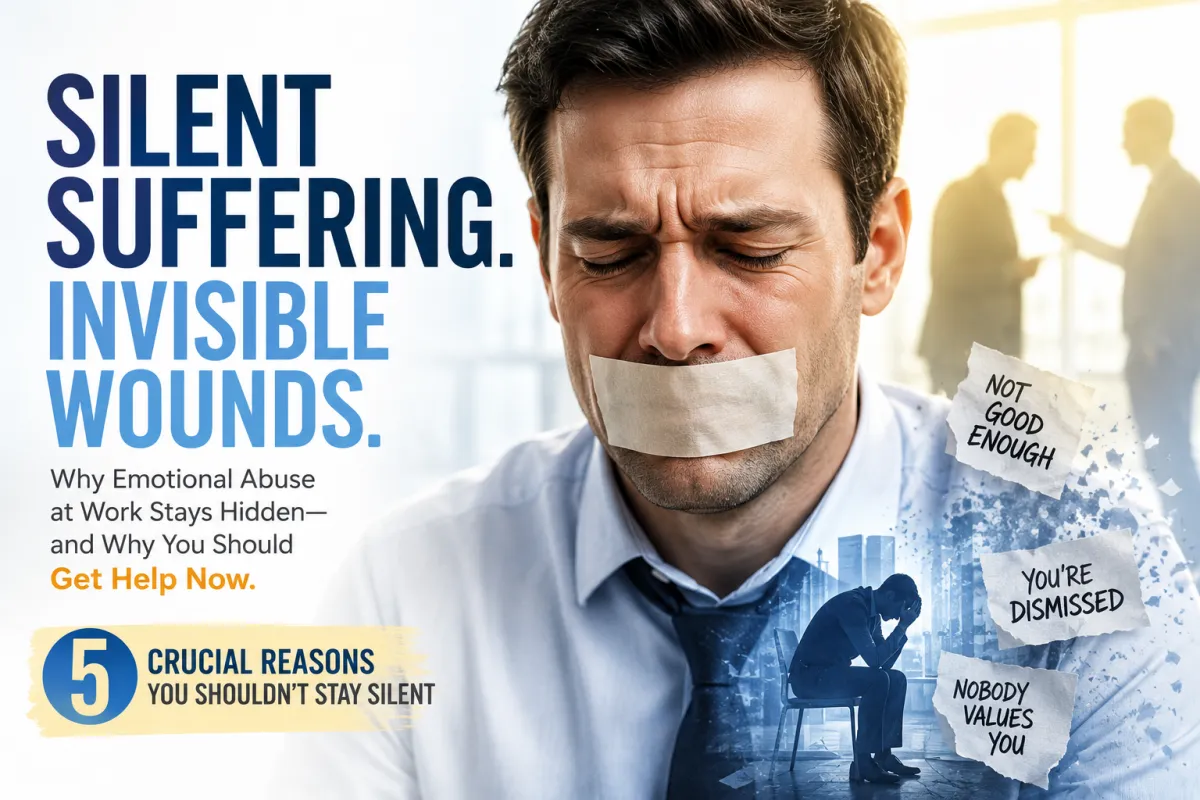
Why Some Professionals Suffer In Silence
One of the most painful realities I have observed as a clinical psychologist and executive coach is that many professionals who suffer emotional abuse at work rarely seek help. They continue showing up to meetings, answering emails, smiling during conversations, and trying to perform... while privately carrying emotional wounds that are affecting their professional success, confidence, health, relationships, and their sense of self. And in some situations, not dealing with their hurt and the abuse might even result in them losing their job.
These are not weak people. In many cases, they are highly capable professionals, managers, supervisors, healthcare workers, educators, executives, and public servants. Yet they often remain silent while enduring toxic criticism, humiliation, manipulation, intimidation, exclusion, gaslighting, or chronic disrespect in the workplace.
Why?
Because professional hurt is often invisible. Unlike a physical injury, there may be no visible bruises, no dramatic public scenes, and no obvious evidence. The abuse frequently occurs through tone, repeated dismissiveness, subtle degradation, political undermining, impossible expectations, emotional intimidation, or sustained psychological pressure over time.
Many victims begin questioning themselves rather than questioning the behavior directed toward them.
They say things like:
"Maybe I’m overreacting." "Perhaps I’m too sensitive." "This is probably just how workplaces are these days." Or, "I should be stronger than this." Or… “Maybe I am doing something wrong.”
Over time, emotional abuse can distort perception and slowly erode emotional stability.
Another reason some people do not seek help is fear. Professionals worry that speaking up may damage their careers, reputation, advancement opportunities, or relationships at work. Some fear retaliation. Others fear being labeled “difficult,” “emotional,” “unstable,” or “not resilient enough.”
Ironically, many of the people suffering the most are high achievers who have built their identity around competence, strength, and performance. Asking for help feels psychologically inconsistent with the image they have spent years trying to maintain.
Some also normalize the abuse because they grew up in environments where emotional mistreatment was common. If criticism, invalidation, emotional volatility, or manipulation existed in earlier relationships, workplace abuse may unconsciously feel familiar, even though it is damaging.
There is also the issue of exhaustion.
Emotionally abused professionals are often mentally depleted. They spend so much energy surviving the workplace that they have little emotional capacity left to seek support, process their experiences, or develop a recovery plan. Many become trapped in a cycle of emotional survival rather than emotional healing.
But despite all these reasons for silence, seeking help is critically important.
1. Emotional Abuse Scarcely Ever Improves on Its Own
Without intervention, emotionally abusive workplace dynamics often intensify over time. The emotional erosion becomes cumulative. What begins as anxiety may evolve into chronic stress, burnout, depression, emotional numbness, anger problems, insomnia, or severe self-doubt.
Early support can prevent deeper psychological injury.
2. Your Emotional Health Affects Every Area of Life
Professional hurt does not remain neatly contained within the workplace. It follows people home.
It affects marriages, parenting, friendships, physical health, sleep, confidence, mental health, motivation, and even spiritual wellbeing. Many professionals eventually realize they are no longer functioning as the person they once were.
Seeking help allows you to reclaim parts of yourself that the workplace slowly diminished.
3. Isolation Magnifies Emotional Pain
One of the most dangerous aspects of emotional abuse is isolation. Silence creates psychological distortion. People begin believing they are alone, weak, or imagining things.
A skilled therapist, coach, mentor, or support system can help restore perspective, validation, clarity, and emotional grounding.
Sometimes healing begins the moment someone finally says, “What happened to you was real.”
4. Healing Restores Professional Effectiveness
Emotional abuse interferes with concentration, creativity, decision-making, communication, leadership presence, and confidence under pressure.
Many professionals mistakenly believe they have become less competent, when in reality they have become emotionally injured.
Healing often restores not only emotional wellbeing but professional performance.
5. Seeking Help Is a Sign of Strength, Not Weakness
One of the greatest misconceptions in professional culture is the belief that enduring silent suffering is strength.
It is not.
Real strength is recognizing when something is harming you and then responding by taking deliberate steps toward recovery, protection, healing, and growth.
In my work with professionals across many industries, I have seen remarkable transformation occur when individuals finally stop minimizing their pain and begin addressing it directly.
No one should have to carry professional hurt alone. And no career success is worth the destruction of your emotional health.
If you aren’t sure how the professional hurt that you’ve experienced in the past has affected, I suggest that you take the “Emotional Resilience Assessment” which I developed. Go to www.ProfessionalHurt.com to take the Assessment.

FAQ
Frequently Asked Questions About Professional Hurt, Emotional Intelligence, and Emotional Resilience.
1. What is Professional Hurt?
Professional Hurt is the emotional, psychological, and often career-related injury that can occur when professionals experience toxic leadership, workplace emotional abuse, chronic invalidation, humiliation, betrayal, intimidation, exclusion, or organizational harm. Unlike ordinary workplace stress, Professional Hurt can continue affecting a person’s confidence, identity, motivation, relationships, and emotional well-being long after the original experience has ended.
2. How is Professional Hurt different from burnout?
Burnout usually comes from chronic stress, overwork, emotional exhaustion, and prolonged demands. Professional Hurt goes deeper. It often involves emotional injury caused by toxic relationships, betrayal, humiliation, bullying, invalidation, or abusive leadership. A burned-out professional may feel depleted. A professionally hurt person may feel wounded, betrayed, diminished, and unsure of themselves.
3. Can toxic leadership cause Professional Hurt?
Yes. Toxic leadership can cause Professional Hurt when leaders use intimidation, public criticism, manipulation, favoritism, emotional invalidation, threats, exclusion, or control tactics instead of emotionally intelligent leadership. Over time, these behaviors can damage trust, confidence, motivation, and psychological safety.
4. Can Professional Hurt affect emotional health?
Yes. Professional Hurt can contribute to anxiety, depression, rumination, sleep problems, emotional exhaustion, loss of confidence, irritability, isolation, and difficulty trusting others. Some professionals continue replaying painful workplace experiences long after they have left the environment because the emotional injury has not yet been fully processed or healed.
5. Why do some professionals suffer in silence?
Many professionals suffer in silence because they fear being judged, labeled as weak, viewed as too sensitive, or punished for speaking up. High-achieving professionals may also minimize their pain because they are used to performing under pressure. Unfortunately, silence often allows the emotional injury to deepen.
6. What role does Emotional Intelligence play in preventing Professional Hurt?
Emotional Intelligence helps leaders recognize the emotional impact of their words, decisions, power, and behavior. Leaders with strong emotional intelligence are more likely to communicate respectfully, manage conflict constructively, repair harm, build trust, and create psychologically safer workplaces. Poor emotional intelligence often increases the risk of emotional damage.
7. How does Emotional Resilience help professionals recover?
Emotional Resilience helps professionals regain stability, perspective, confidence, and emotional strength after difficult workplace experiences. It does not mean pretending the hurt did not happen. It means learning how to process the experience, protect your emotional health, rebuild your sense of self, and move forward without allowing the pain to define your future.
8. How do I know if I have experienced Professional Hurt?
You may have experienced Professional Hurt if a workplace experience continues to affect your confidence, mood, motivation, sleep, relationships, or sense of professional identity. Signs may include replaying painful conversations, dreading work, feeling emotionally unsafe, questioning your competence, feeling betrayed, or struggling to recover from how you were treated.
9. Can leaders repair Professional Hurt after damage has been done?
In some cases, yes. Repair requires honesty, accountability, humility, changed behavior, and emotionally intelligent communication. Leaders must stop minimizing the harm, listen without defensiveness, acknowledge the emotional impact, and create conditions where trust can be rebuilt. However, repair is not possible if harmful behavior continues or accountability is avoided.
10. How can Dr. Marcus Mottley’s work help professionals dealing with Professional Hurt?
Dr. Marcus M. Mottley, brings together clinical psychology, executive coaching, emotional intelligence, leadership development, and resilience training to help professionals understand, assess, and recover from Professional Hurt. His work focuses on helping professionals make sense of workplace emotional injury, rebuild confidence, strengthen resilience, and move forward with greater emotional clarity and professional power.