
Professional Hurt, Emotional Intelligence
& Resilience Knowledge Hub
Articles and insights from Dr. Marcus Mottley on professional hurt, emotional intelligence, workplace emotional abuse, toxic leadership, emotional resilience, and recovery for professionals. Professional hurt is the emotional and psychological injury caused by toxic leadership, chronic invalidation, humiliation, betrayal, workplace emotional abuse, and organizational harm.
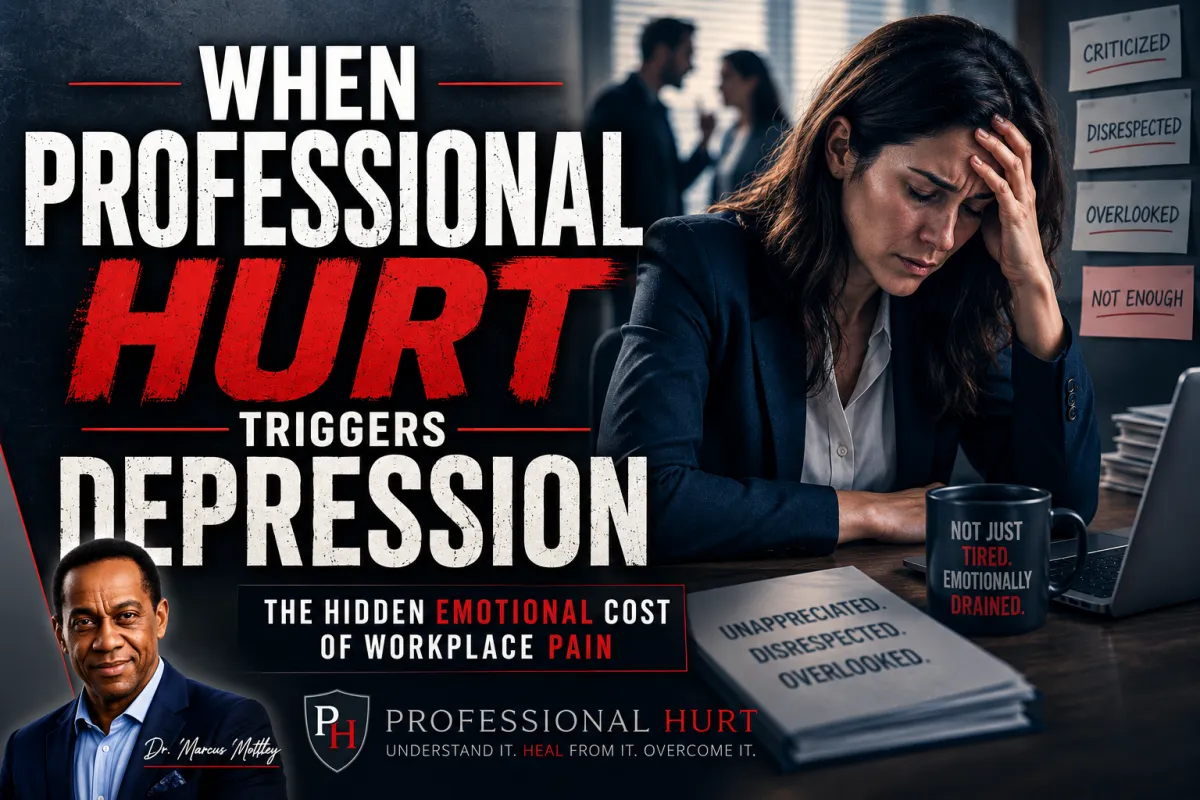
When Professional Hurt Turns Into Depression
Many professionals assume that depression is caused primarily by biological factors, problems at home, financial difficulties, personal loss, or some type of physical or psychological trauma. While these can certainly contribute, there is another source of emotional suffering that is often overlooked: professional hurt.
Over the years, I have worked with executives, managers, supervisors, healthcare professionals, educators, government employees, scientists and business owners who initially came to me believing they were simply stressed, burned out, or exhausted. As we explored their experiences more deeply, a different picture emerged. Many had been carrying the emotional wounds of workplace mistreatment for a long time – in some cases – decades.
Repeated criticism, emotional invalidation, bullying, exclusion, betrayal, humiliation, unfair treatment, toxic leadership, chronic disrespect, and organizational neglect can leave deep emotional scars. When these experiences persist without resolution, they can gradually erode a person's emotional well-being and contribute to symptoms commonly associated with depression.
One of the challenges is that professional hurt often develops slowly. Most professionals are resilient people. They are accustomed to solving problems, pushing through adversity, and maintaining high levels of performance. As a result, they may not immediately recognize that their emotional health is deteriorating.
Instead, they begin noticing subtle changes. They wake up feeling tired despite getting adequate sleep. Work that once energized them now feels overwhelming. Their motivation declines. They slowly become emotionally detached from colleagues, clients, or projects they once cared about. They begin doubting themselves more frequently. Their confidence drops. They may become irritable, withdrawn, anxious, or emotionally numb.
For some individuals, the symptoms become more pronounced. They find themselves dreading Monday mornings. They experience persistent sadness, frequent tearfulness, difficulty concentrating, loss of enjoyment, disrupted sleep, changes in appetite, and a growing sense of hopelessness about their professional future. Some describe feeling trapped. Others feel defeated.
What makes professional hurt particularly dangerous is that many people continue functioning on the outside while suffering on the inside. They still attend meetings, complete assignments, and meet deadlines. To others, they appear successful. Internally, however, they may be struggling significantly.
So how do you know when it is time to seek help?
One important indicator is duration. If feelings of sadness, discouragement, emotional exhaustion, or hopelessness have persisted for several weeks or months despite your efforts to recover, it may be time to seek support.
Another indicator is impact. If your emotional state is affecting your work performance, relationships, sleep, health, confidence, or overall quality of life, professional assistance may be beneficial.
A third indicator is rumination. Many hurt professionals replay painful workplace events repeatedly in their minds. They mentally revisit conversations, criticisms, betrayals, and perceived failures. When these thought patterns become persistent and difficult to interrupt, they can intensify emotional distress and delay recovery.
The good news is that professional hurt can be addressed. Healing is possible.
The first step is acknowledging that what you are experiencing matters. Emotional injuries sustained at work are real. They deserve attention. Ignoring them rarely makes them disappear.
The second step is gaining clarity. Understanding the nature and severity of your professional hurt can help you identify the most effective path forward. This is one reason why I encourage professionals to periodically assess their emotional well-being. Tools such as the Emotional Resilience Assessment for Professionals™ can help individuals gain insight into areas of hidden emotional strain and resilience.
The third step is obtaining appropriate support. Coaches, counselors, psychologists, and other helping professionals who understand and have experience helping professionals with workplace emotional injuries can provide strategies to rebuild confidence, strengthen resilience, establish boundaries, process emotional pain, and create a plan for recovery.
You do not have to wait until your situation becomes unbearable before seeking assistance.
If you have been carrying the weight of professional hurt, pay attention to what your emotions may be trying to tell you. The earlier you address these issues, the easier it often becomes to prevent deeper emotional consequences.
At ProfessionalHurt.com I continue to see remarkable transformations when professionals recognize the impact of workplace emotional injuries and take intentional steps toward healing. Recovery is not only possible. With the right support, many professionals emerge stronger, wiser, and more emotionally resilient than they were before.

FAQ
Frequently Asked Questions About Professional Hurt, Emotional Intelligence, and Emotional Resilience.
1. What is Professional Hurt?
Professional Hurt is the emotional, psychological, and often career-related injury that can occur when professionals experience toxic leadership, workplace emotional abuse, chronic invalidation, humiliation, betrayal, intimidation, exclusion, or organizational harm. Unlike ordinary workplace stress, Professional Hurt can continue affecting a person’s confidence, identity, motivation, relationships, and emotional well-being long after the original experience has ended.
2. How is Professional Hurt different from burnout?
Burnout usually comes from chronic stress, overwork, emotional exhaustion, and prolonged demands. Professional Hurt goes deeper. It often involves emotional injury caused by toxic relationships, betrayal, humiliation, bullying, invalidation, or abusive leadership. A burned-out professional may feel depleted. A professionally hurt person may feel wounded, betrayed, diminished, and unsure of themselves.
3. Can toxic leadership cause Professional Hurt?
Yes. Toxic leadership can cause Professional Hurt when leaders use intimidation, public criticism, manipulation, favoritism, emotional invalidation, threats, exclusion, or control tactics instead of emotionally intelligent leadership. Over time, these behaviors can damage trust, confidence, motivation, and psychological safety.
4. Can Professional Hurt affect emotional health?
Yes. Professional Hurt can contribute to anxiety, depression, rumination, sleep problems, emotional exhaustion, loss of confidence, irritability, isolation, and difficulty trusting others. Some professionals continue replaying painful workplace experiences long after they have left the environment because the emotional injury has not yet been fully processed or healed.
5. Why do some professionals suffer in silence?
Many professionals suffer in silence because they fear being judged, labeled as weak, viewed as too sensitive, or punished for speaking up. High-achieving professionals may also minimize their pain because they are used to performing under pressure. Unfortunately, silence often allows the emotional injury to deepen.
6. What role does Emotional Intelligence play in preventing Professional Hurt?
Emotional Intelligence helps leaders recognize the emotional impact of their words, decisions, power, and behavior. Leaders with strong emotional intelligence are more likely to communicate respectfully, manage conflict constructively, repair harm, build trust, and create psychologically safer workplaces. Poor emotional intelligence often increases the risk of emotional damage.
7. How does Emotional Resilience help professionals recover?
Emotional Resilience helps professionals regain stability, perspective, confidence, and emotional strength after difficult workplace experiences. It does not mean pretending the hurt did not happen. It means learning how to process the experience, protect your emotional health, rebuild your sense of self, and move forward without allowing the pain to define your future.
8. How do I know if I have experienced Professional Hurt?
You may have experienced Professional Hurt if a workplace experience continues to affect your confidence, mood, motivation, sleep, relationships, or sense of professional identity. Signs may include replaying painful conversations, dreading work, feeling emotionally unsafe, questioning your competence, feeling betrayed, or struggling to recover from how you were treated.
9. Can leaders repair Professional Hurt after damage has been done?
In some cases, yes. Repair requires honesty, accountability, humility, changed behavior, and emotionally intelligent communication. Leaders must stop minimizing the harm, listen without defensiveness, acknowledge the emotional impact, and create conditions where trust can be rebuilt. However, repair is not possible if harmful behavior continues or accountability is avoided.
10. How can Dr. Marcus Mottley’s work help professionals dealing with Professional Hurt?
Dr. Marcus M. Mottley, brings together clinical psychology, executive coaching, emotional intelligence, leadership development, and resilience training to help professionals understand, assess, and recover from Professional Hurt. His work focuses on helping professionals make sense of workplace emotional injury, rebuild confidence, strengthen resilience, and move forward with greater emotional clarity and professional power.