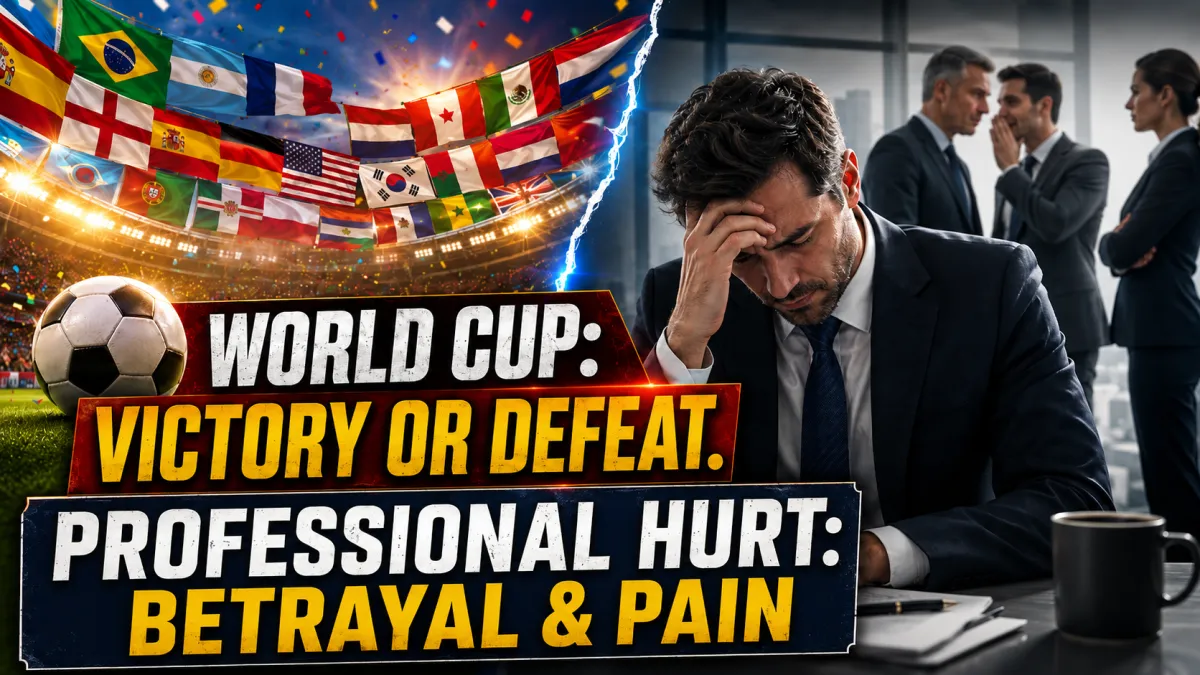
The World Cup Ends with Victory or Defeat But Professional Hurt Begins with Betrayal.
The knockout stage of the FIFA World Cup is one of the most emotionally dramatic moments in sport. After years of preparation, at the final whistle, one team celebrates while the other team goes home.
Footballers at the World Cup are professionals who dream of representing their countries every four years. And, like professionals at work around the world, they give their best on the football field – win, lose or draw. But there is one important difference between what happens on the football field and what happens every day in workplaces around the world.
Most football teams lose because they were outplayed on the field of play. Many professionals lose when they are emotionally hurt because they were mistreated on the field of work.
There is a world of difference between defeat and abuse.
As a clinical psychologist and executive coach, I have worked with professionals whose emotional wounds were not created by poor performance. They were created by toxic leaders, manipulative coworkers, organizational politics, emotional invalidation, bullying, public humiliation, betrayal, exclusion, retaliation, and the abuse of authority.
Their careers did not simply encounter disappointment. Their emotional wellbeing was injured by the behavior of other people.
That is what we call professional hurt.
Professional hurt occurs when another person's words, decisions, actions, or misuse of power begin changing the way you think about yourself. It slowly erodes confidence. It causes talented professionals to question their competence, silence their opinions, distrust their instincts, and carry emotional pain long after the workplace incident has ended.
World Cup teams do something remarkably healthy after elimination.
They study what happened.
Coaches review every minute of the match. Players analyze decisions, identify weaknesses, and begin preparing for the future. They refuse to pretend the loss never occurred, but neither do they allow one defeat to define their identity.
Many professionals, however, never receive that opportunity.
Instead of objectively examining what happened, they begin accepting the false messages communicated by those who hurt them.
They begin believing they deserved the criticism.
They conclude they were the problem.
They start questioning their intelligence, leadership ability, and professional value.
The injury inflicted by someone else gradually becomes part of their identity.
That is one of the greatest dangers of professional hurt.
Resilience does not mean pretending that emotional abuse, betrayal, or unfair treatment never happened.
Resilience means refusing to allow someone else's unhealthy behavior to determine who you become.
I have worked with exceptional professionals who were emotionally wounded by authoritarian leaders, narcissistic supervisors, unethical organizations, and toxic workplace cultures. What ultimately transformed them was not simply leaving those environments. It was learning to separate what was done to them from who they actually were.
That distinction changes everything.
This is one of the reasons I developed the Emotional Resilience Assessment for Professionals™. Many people know they have been hurt, but they cannot fully explain how that hurt is affecting them today. The assessment helps uncover hidden emotional patterns, identify resilience strengths, and reveal the ways workplace experiences may still be influencing confidence, decision-making, relationships, stress levels, and career growth.
Sometimes the greatest breakthrough is realizing that you are not broken.
You have been wounded.
And wounded people can heal.
As the World Cup continues, one team after another will leave the tournament. Their disappointment is real, but it is part of fair competition.
Professional hurt is different.
It is often created by the unfair actions of other people.
The good news is this: while you cannot always control how people treat you, you can learn how to heal from what they did. You can rebuild your confidence, strengthen your resilience, and ensure that someone else's behavior no longer dictates your future.
Take the Emotional Resilience Assessment for Professionals™ by going here.
