When Work Hurts
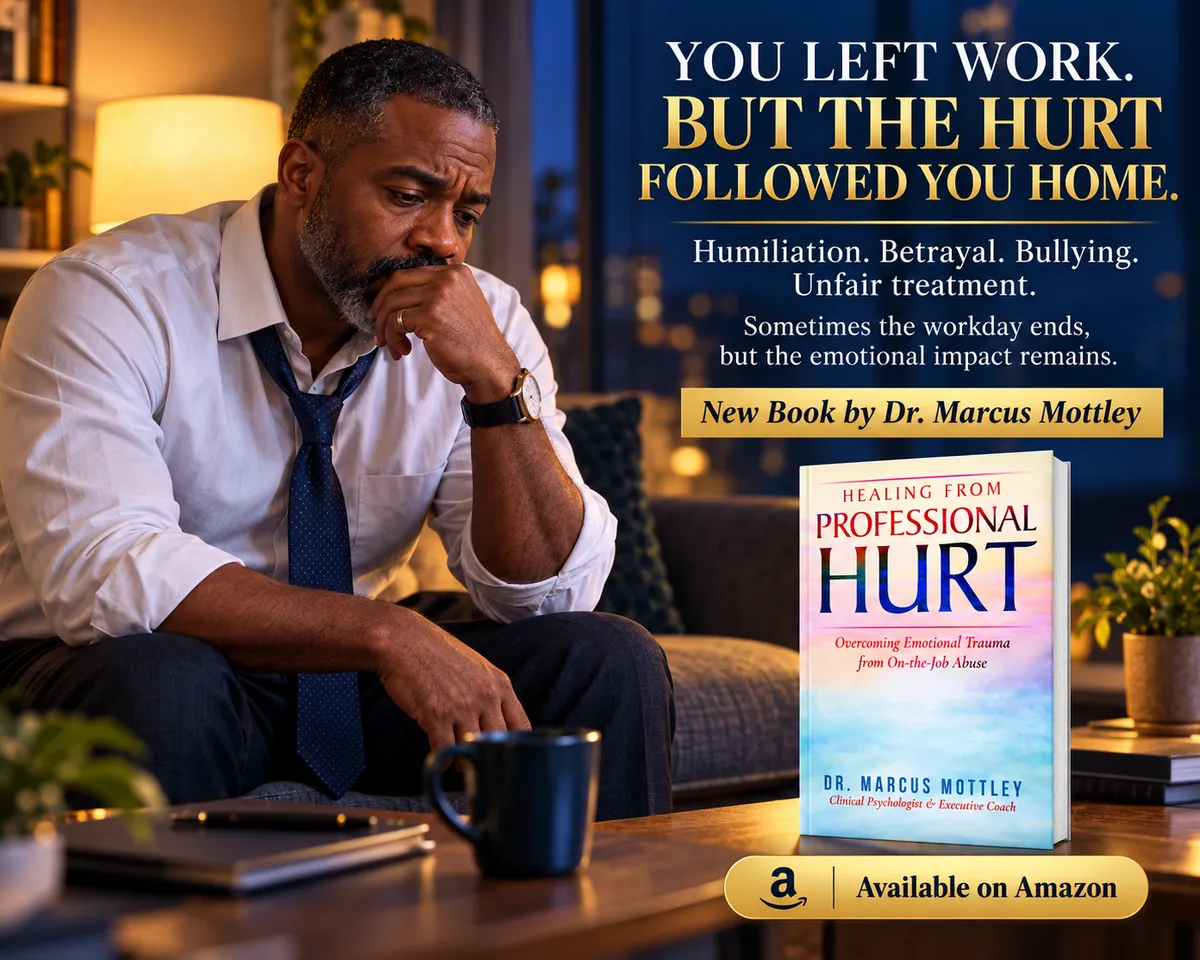
You Left Work. But the Hurt Followed You Home.
Why emotional abuse at work can continue hurting you long after the workday ends.
You closed your computer. Left the office. Drove home.
But something followed you.
The humiliation of being criticized in front of colleagues. The betrayal by someone you trusted. The unfair treatment. The bullying. The constant undermining of your competence and confidence.
And now, hours later, you're still replaying the conversations.
Why did they say that? Why didn't I defend myself? How could they treat me that way?
Your body left the workplace. But emotionally, you're still there.
When Work Becomes an Emotional Injury
As a Clinical Psychologist and Executive Coach, I've worked with professionals who are highly competent, experienced, and successful—yet deeply affected by how they've been treated at work.
Some have endured years of intimidation, manipulation, exclusion, or relentless criticism. Others experienced a single devastating betrayal that changed how they viewed themselves and their careers.
I call this Professional Hurt.
Professional Hurt refers to the emotional and psychological injury that can result from harmful experiences in the workplace, particularly those involving abuse, humiliation, betrayal, bullying, or persistent mistreatment.
And its consequences can extend far beyond the office.
The Hidden Costs of Professional Hurt
The effects are not always immediately obvious.
You may notice that you're becoming more irritable with your family. You have difficulty sleeping. Your confidence has diminished. You begin questioning decisions you once made effortlessly.
Perhaps you dread Monday mornings. Or you're constantly rehearsing what you'll say to your boss, anticipating the next confrontation.
Some professionals begin withdrawing emotionally. Others become hypervigilant, anxious, defensive, or increasingly distrustful.
And sometimes, even after leaving the toxic workplace, these reactions persist.
Changing jobs doesn't automatically erase emotional injuries.
Healing Requires More Than Moving On
Too often, professionals are advised to toughen up, forget what happened, or simply move forward.
But healing is not the same as forgetting.
It involves recognizing the injury, understanding its psychological impact, challenging the damaging beliefs that may have developed, and rebuilding emotional confidence.
It also involves learning to establish healthier boundaries, strengthen emotional competence, and reclaim control over your professional and personal life.
Most importantly, healing means refusing to allow someone else's harmful behavior to determine your future.
A Book for Professionals Who Are Ready to Heal
I wrote Healing from Professional Hurt: Overcoming Emotional Trauma from On-the-Job Abuse to help professionals understand these often-invisible injuries and discover practical pathways toward recovery.
Drawing on my experience as a Clinical Psychologist, Executive Coach, and organizational trainer, I explore how workplace mistreatment affects us—and what we can do to begin healing.
If you've ever carried workplace humiliation, betrayal, or emotional pain home with you, this book was written with you in mind.
You cannot always control how others treat you. But you can begin reclaiming how their behavior affects your life and future.
📘 Get your copy of Healing from Professional Hurt on Amazon
Dr. Marcus Mottley is a Clinical Psychologist, Executive Coach, author, and organizational trainer specializing in emotional intelligence, emotional competence, leadership, and workplace psychological well-being.
