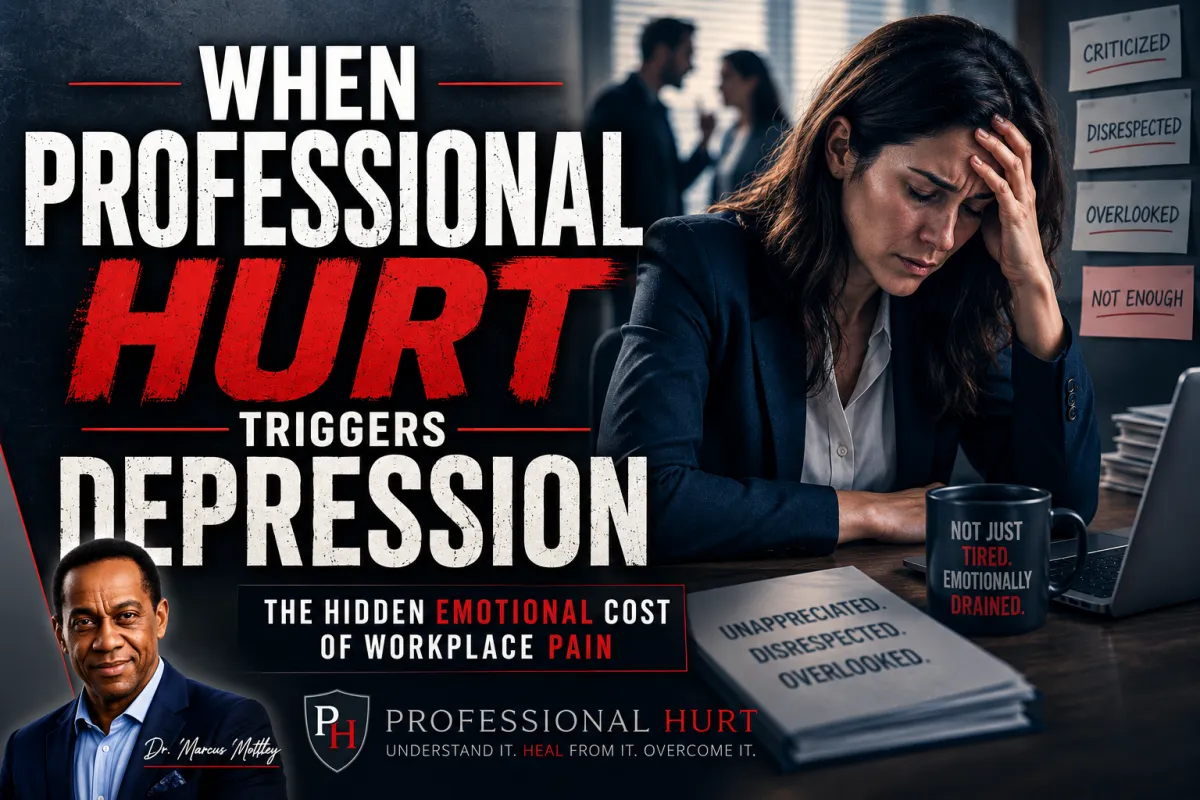
When Professional Hurt Turns Into Depression
Many professionals assume that depression is caused primarily by biological factors, problems at home, financial difficulties, personal loss, or some type of physical or psychological trauma. While these can certainly contribute, there is another source of emotional suffering that is often overlooked: professional hurt.
Over the years, I have worked with executives, managers, supervisors, healthcare professionals, educators, government employees, scientists and business owners who initially came to me believing they were simply stressed, burned out, or exhausted. As we explored their experiences more deeply, a different picture emerged. Many had been carrying the emotional wounds of workplace mistreatment for a long time – in some cases – decades.
Repeated criticism, emotional invalidation, bullying, exclusion, betrayal, humiliation, unfair treatment, toxic leadership, chronic disrespect, and organizational neglect can leave deep emotional scars. When these experiences persist without resolution, they can gradually erode a person's emotional well-being and contribute to symptoms commonly associated with depression.
One of the challenges is that professional hurt often develops slowly. Most professionals are resilient people. They are accustomed to solving problems, pushing through adversity, and maintaining high levels of performance. As a result, they may not immediately recognize that their emotional health is deteriorating.
Instead, they begin noticing subtle changes. They wake up feeling tired despite getting adequate sleep. Work that once energized them now feels overwhelming. Their motivation declines. They slowly become emotionally detached from colleagues, clients, or projects they once cared about. They begin doubting themselves more frequently. Their confidence drops. They may become irritable, withdrawn, anxious, or emotionally numb.
For some individuals, the symptoms become more pronounced. They find themselves dreading Monday mornings. They experience persistent sadness, frequent tearfulness, difficulty concentrating, loss of enjoyment, disrupted sleep, changes in appetite, and a growing sense of hopelessness about their professional future. Some describe feeling trapped. Others feel defeated.
What makes professional hurt particularly dangerous is that many people continue functioning on the outside while suffering on the inside. They still attend meetings, complete assignments, and meet deadlines. To others, they appear successful. Internally, however, they may be struggling significantly.
So how do you know when it is time to seek help?
One important indicator is duration. If feelings of sadness, discouragement, emotional exhaustion, or hopelessness have persisted for several weeks or months despite your efforts to recover, it may be time to seek support.
Another indicator is impact. If your emotional state is affecting your work performance, relationships, sleep, health, confidence, or overall quality of life, professional assistance may be beneficial.
A third indicator is rumination. Many hurt professionals replay painful workplace events repeatedly in their minds. They mentally revisit conversations, criticisms, betrayals, and perceived failures. When these thought patterns become persistent and difficult to interrupt, they can intensify emotional distress and delay recovery.
The good news is that professional hurt can be addressed. Healing is possible.
The first step is acknowledging that what you are experiencing matters. Emotional injuries sustained at work are real. They deserve attention. Ignoring them rarely makes them disappear.
The second step is gaining clarity. Understanding the nature and severity of your professional hurt can help you identify the most effective path forward. This is one reason why I encourage professionals to periodically assess their emotional well-being. Tools such as the Emotional Resilience Assessment for Professionals™ can help individuals gain insight into areas of hidden emotional strain and resilience.
The third step is obtaining appropriate support. Coaches, counselors, psychologists, and other helping professionals who understand and have experience helping professionals with workplace emotional injuries can provide strategies to rebuild confidence, strengthen resilience, establish boundaries, process emotional pain, and create a plan for recovery.
You do not have to wait until your situation becomes unbearable before seeking assistance.
If you have been carrying the weight of professional hurt, pay attention to what your emotions may be trying to tell you. The earlier you address these issues, the easier it often becomes to prevent deeper emotional consequences.
At ProfessionalHurt.com I continue to see remarkable transformations when professionals recognize the impact of workplace emotional injuries and take intentional steps toward healing. Recovery is not only possible. With the right support, many professionals emerge stronger, wiser, and more emotionally resilient than they were before.
