
Professional Hurt, Emotional Intelligence
& Resilience Knowledge Hub
Articles and insights from Dr. Marcus Mottley on professional hurt, emotional intelligence, workplace emotional abuse, toxic leadership, emotional resilience, and recovery for professionals. Professional hurt is the emotional and psychological injury caused by toxic leadership, chronic invalidation, humiliation, betrayal, workplace emotional abuse, and organizational harm.
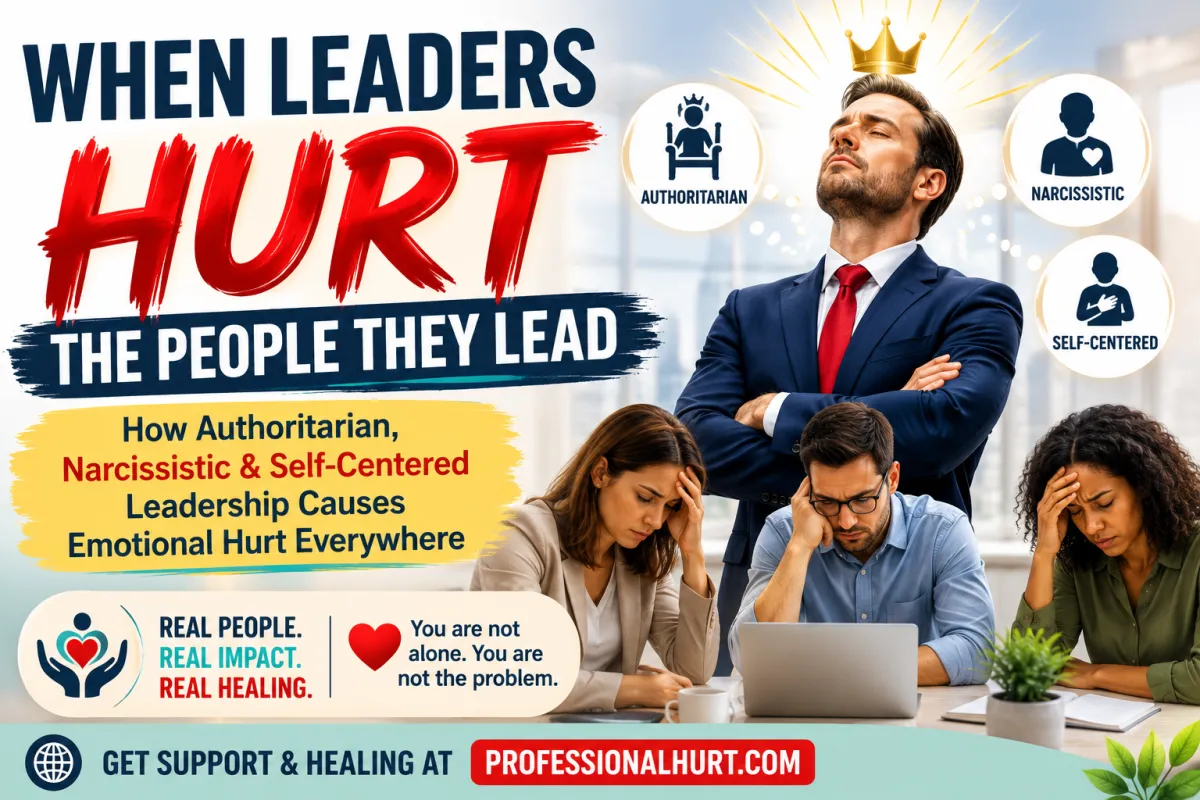
Leaders Who Damage People Emotionally
Over the years, I have worked with professionals from corporations, government agencies, healthcare organizations, educational institutions, and nonprofit organizations. I have listened to hundreds of stories about workplace stress, burnout, anxiety, and conflict. Yet one theme appears with disturbing frequency: the emotional damage caused by leaders whose need for control, admiration, power, or self-preservation becomes more important than the people they lead.
I am referring to authoritarian, narcissistic, and deeply self-centered leaders.
These leaders exist in boardrooms, corporate and public sector offices, political institutions, community organizations, volunteer groups and, frighteningly, at the highest levels of governments around the world. While their titles may differ, their impact is often remarkably similar. They create environments where fear replaces trust, compliance replaces creativity, threats and bullying replace collaboration, and emotional injury becomes an accepted cost of doing business.
Authoritarian leaders often believe that strength means domination. They see disagreement as disloyalty. They interpret questions as challenges to their authority. They make decisions unilaterally, discourage dissent, and surround themselves with people who tell them what they want to hear rather than what they need to know.
Narcissistic leaders take this dynamic even further. Their primary concern is often not the mission, the organization, or the people. Their primary concern is themselves. Their image. Their status. Their influence. Their legacy. They crave admiration and recognition while frequently showing little genuine concern for the emotional wellbeing of those around them. When things go well, they take the credit. When things go badly, they often look for someone else to blame.
The result is professional hurt on a massive scale.
Employees begin walking on eggshells. Managers become afraid to raise concerns. Teams stop sharing innovative ideas because they know disagreement will be punished. Citizens no longer feel ‘free to speak’ their minds. In other words, people learn that survival depends on political navigation rather than honest communication.
The emotional consequences can be severe.
I have seen talented professionals lose confidence after years of being publicly criticized, ignored, undermined, humiliated, or blamed. I have worked with individuals who developed anxiety symptoms before meetings because they never knew when the next attack would come. Others experienced insomnia, depression, chronic stress, emotional exhaustion, and profound self-doubt.
What makes this especially troubling is that the damage extends beyond individuals.
When leaders create emotionally unsafe environments, organizations suffer. Innovation declines. Collaboration weakens. Employee engagement drops. Turnover increases. Trust evaporates. The best employees often leave while those who remain become increasingly disengaged.
The same dynamic can occur within government offices and political systems. When leaders become obsessed with power, image, control, or ideological purity, entire communities can suffer. Public servants become reluctant to speak honestly. Constructive criticism disappears. Decision-making becomes distorted. Fear replaces dialogue.
History repeatedly demonstrates that authoritarian and narcissistic leadership creates emotional casualties long before it creates failures at organizational, community or national levels.
Unfortunately, many of these leaders are unaware of the harm they cause. Some genuinely believe their behavior is effective leadership. Others are so invested in protecting their ego that they cannot tolerate feedback that challenges their self-image. In some cases, the worst offenders just don’t care of their impact on others.
This is why many of these leaders need help themselves.
They often need executive coaching, psychological insight, emotional intelligence development, professional counseling or therapy, and in some cases, they need psychiatric intervention. Not every leader can be helped, but those who can be rehabilitated need to understand the difference between authority and leadership. They need to learn emotional self-awareness, empathy, humility, perspective-taking, and healthy accountability.
Most importantly, they need to recognize that leadership is not about proving your importance. It is about increasing the effectiveness, wellbeing, and success of the people you lead.
For emerging leaders, let this serve as a warning.
Do not confuse fear with respect. Do not mistake compliance for commitment. Do not assume that authority makes you right. Do not assume that your appointment, selection or election to high office is a free ticket to bully, threaten, or otherwise hurt the people you lead. The moment your ego becomes more important than your people, you have begun moving toward dangerous territory.
The strongest leaders I have encountered are not the loudest, most controlling, or most self-promoting individuals in the room. They are secure enough to listen, humble enough to learn, and courageous enough to admit when they are wrong.
If you have been emotionally hurt by a leader whose behavior has left you questioning your worth, confidence, or professional identity, understand that your reaction is not weakness. It is often a normal response to prolonged emotional injury.
That is one of the reasons I create the resources available through professionalhurt.com. Emotional wounds created by unhealthy leadership are real. They deserve to be acknowledged, understood, and healed.
The future belongs to leaders who elevate people, not leaders who diminish them. Unfortunately, too many organizations learn that lesson only after significant damage has already been done.
FAQ
Frequently Asked Questions About Professional Hurt, Emotional Intelligence, and Emotional Resilience.
1. What is Professional Hurt?
Professional Hurt is the emotional, psychological, and often career-related injury that can occur when professionals experience toxic leadership, workplace emotional abuse, chronic invalidation, humiliation, betrayal, intimidation, exclusion, or organizational harm. Unlike ordinary workplace stress, Professional Hurt can continue affecting a person’s confidence, identity, motivation, relationships, and emotional well-being long after the original experience has ended.
2. How is Professional Hurt different from burnout?
Burnout usually comes from chronic stress, overwork, emotional exhaustion, and prolonged demands. Professional Hurt goes deeper. It often involves emotional injury caused by toxic relationships, betrayal, humiliation, bullying, invalidation, or abusive leadership. A burned-out professional may feel depleted. A professionally hurt person may feel wounded, betrayed, diminished, and unsure of themselves.
3. Can toxic leadership cause Professional Hurt?
Yes. Toxic leadership can cause Professional Hurt when leaders use intimidation, public criticism, manipulation, favoritism, emotional invalidation, threats, exclusion, or control tactics instead of emotionally intelligent leadership. Over time, these behaviors can damage trust, confidence, motivation, and psychological safety.
4. Can Professional Hurt affect emotional health?
Yes. Professional Hurt can contribute to anxiety, depression, rumination, sleep problems, emotional exhaustion, loss of confidence, irritability, isolation, and difficulty trusting others. Some professionals continue replaying painful workplace experiences long after they have left the environment because the emotional injury has not yet been fully processed or healed.
5. Why do some professionals suffer in silence?
Many professionals suffer in silence because they fear being judged, labeled as weak, viewed as too sensitive, or punished for speaking up. High-achieving professionals may also minimize their pain because they are used to performing under pressure. Unfortunately, silence often allows the emotional injury to deepen.
6. What role does Emotional Intelligence play in preventing Professional Hurt?
Emotional Intelligence helps leaders recognize the emotional impact of their words, decisions, power, and behavior. Leaders with strong emotional intelligence are more likely to communicate respectfully, manage conflict constructively, repair harm, build trust, and create psychologically safer workplaces. Poor emotional intelligence often increases the risk of emotional damage.
7. How does Emotional Resilience help professionals recover?
Emotional Resilience helps professionals regain stability, perspective, confidence, and emotional strength after difficult workplace experiences. It does not mean pretending the hurt did not happen. It means learning how to process the experience, protect your emotional health, rebuild your sense of self, and move forward without allowing the pain to define your future.
8. How do I know if I have experienced Professional Hurt?
You may have experienced Professional Hurt if a workplace experience continues to affect your confidence, mood, motivation, sleep, relationships, or sense of professional identity. Signs may include replaying painful conversations, dreading work, feeling emotionally unsafe, questioning your competence, feeling betrayed, or struggling to recover from how you were treated.
9. Can leaders repair Professional Hurt after damage has been done?
In some cases, yes. Repair requires honesty, accountability, humility, changed behavior, and emotionally intelligent communication. Leaders must stop minimizing the harm, listen without defensiveness, acknowledge the emotional impact, and create conditions where trust can be rebuilt. However, repair is not possible if harmful behavior continues or accountability is avoided.
10. How can Dr. Marcus Mottley’s work help professionals dealing with Professional Hurt?
Dr. Marcus M. Mottley, brings together clinical psychology, executive coaching, emotional intelligence, leadership development, and resilience training to help professionals understand, assess, and recover from Professional Hurt. His work focuses on helping professionals make sense of workplace emotional injury, rebuild confidence, strengthen resilience, and move forward with greater emotional clarity and professional power.