
Professional Hurt, Emotional Intelligence
& Resilience Knowledge Hub
Articles and insights from Dr. Marcus Mottley on professional hurt, emotional intelligence, workplace emotional abuse, toxic leadership, emotional resilience, and recovery for professionals. Professional hurt is the emotional and psychological injury caused by toxic leadership, chronic invalidation, humiliation, betrayal, workplace emotional abuse, and organizational harm.
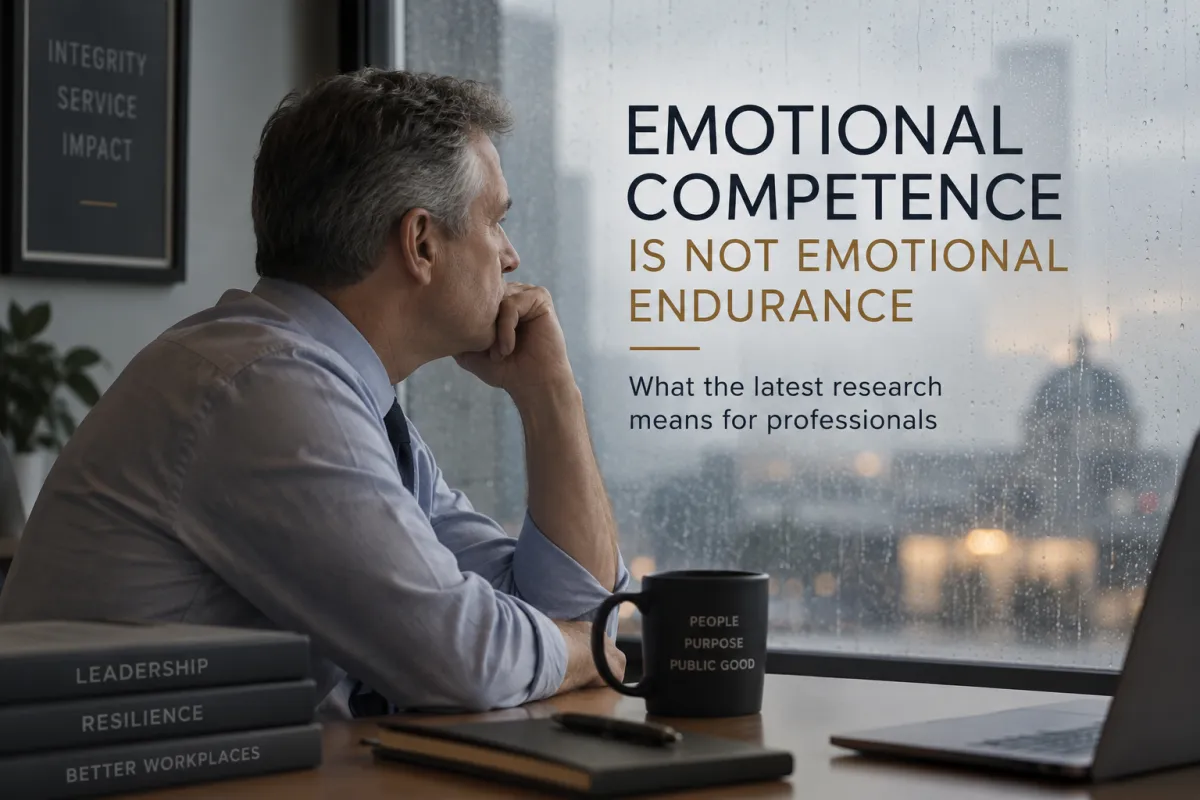
Professionals Should Not Be Emotional Endurance Athletes!
A recent research finding should make every serious professional stop and think. The study stood out because it challenged a popular assumption about emotional intelligence, burnout, and professional resilience. Researchers looked at what happens when professionals are placed in work situations that conflict with their values, standards, judgment, or sense of what's right.
The findings are hugely important. The conflict that professionals experienced was linked to the relationship between their work-values and the levels of burnout they had on their jobs. And quite significantly, the strength of their emotional intelligence, by itself, did not significantly protect people from that burnout.
That finding really matters a lot.
For years, professionals have been told to be more resilient, more emotionally intelligent, more adaptable, more flexible, more positive, more patient, and more understanding. Much of that advice has a lot of value. I have spent decades helping professionals strengthen emotional intelligence, emotional competence, resilience, communication, leadership, and self-management under pressure.
But there is a serious danger when organizations misuse these ideas.
Emotional intelligence should never become a polite way of telling professionals to tolerate harmful conditions indefinitely. Resilience should never become a spiritual-sounding word for silent suffering. Adaptability should never mean that you keep bending until something inside you breaks.
This is especially important for professionals who are dealing with professional hurt.
Professional hurt occurs when workplace experiences begin damaging your confidence, identity, emotional stability, and sense of professional worth. Sometimes the source is a toxic manager. Sometimes it is emotional abuse from colleagues, customers, or leaders. Sometimes it is constant disrespect, manipulation, humiliation, exclusion, unfairness, or being pressured to act against your values.
And sometimes the hurt comes from being expected to keep functioning normally in an environment that repeatedly violates what you believe is right.
That kind of pressure is not merely stressful. It is morally and emotionally draining.
A professional can handle a heavy workload when the work has meaning. A professional can endure pressure when the mission is clear. A professional can make sacrifices when the sacrifice serves a purpose. But when the work environment begins forcing people to compromise their values, ignore what they know is wrong, remain silent about harmful decisions, or pretend that dysfunctional behavior is normal, a deeper kind of exhaustion can develop.
That is not weakness. That is a human response to a conflict between the status quo and one’s values.
This is why I often say that emotional competence is not emotional endurance.
Emotional competence is not the ability to absorb endless pressure without protest. It is not the ability to smile through mistreatment. It is not the ability to remain calm while your confidence, health, and integrity are being slowly eroded.
Emotional competence is the ability to understand what you are experiencing, name it accurately, regulate your response, think clearly, protect your values, and make wise decisions about what needs to happen next.
That is a very different standard to what you may normally hear about emotional intelligence.
The research referenced above helps validate what many professionals already feel in their bodies. You can be emotionally intelligent and still become exhausted. You can be self-aware and still feel depleted. You can be empathic and still become angry. You can be skilled, mature, and responsible and still be hurt by a workplace that keeps asking you to violate yourself physically, emotionally, cognitively, and ethically.
So, what should professionals do with this information?
First, stop blaming yourself for every emotional reaction you have at work. Your anxiety, frustration, fatigue, resentment, sadness, or loss of motivation may not mean that you are failing. Those reactions may be telling you that something in your environment is not aligned with your values, role, or wellbeing.
Second, separate endurance from resilience. Endurance seeks to understand “How much more can I take?” Resilience wants to know “What do I need in order to recover, protect myself, and function wisely?” That distinction matters greatly. Endurance without reflection can become self-abandonment. And, resilience requires awareness, boundaries, support, and action.
Third, examine the source of the pressure. Is the problem your skill level, or is it the work environment? Is the issue poor time management, or are you being overloaded? Are you lacking emotional intelligence, or are you working under emotionally abusive leadership? Are you being too sensitive, or are you responding normally to chronic disrespect, overload, and unrealistic expectations?
Fourth, get support before the damage deepens. This may mean speaking with a therapist, mentor, trusted colleague, HR professional, spiritual advisor, or executive coach. A knowledgeable, skilled and experienced executive coach can help you sort through pressure, values conflict, leadership dynamics, communication choices, boundaries, and career decisions without reducing everything to “just cope better.”
That is part of the work I do with professionals and leaders. I help people think clearly under pressure, understand what is happening to them emotionally, strengthen their resilience, and make decisions that protect both their performance and their personhood.
Finally, assess yourself honestly. The free Emotional Resilience Assessment for Professionals™ was created as a simple tool to help professionals reflect on how workplace experiences may be affecting their confidence, stress, resilience, and emotional wellbeing. Sometimes you do not need another motivational quote. You need language for what you have been carrying.
The lesson from the research is clear: We should keep developing emotional intelligence.
But we must stop pretending that emotional intelligence alone can overcome unhealthy workplace conditions, value conflict, professional hurt, or emotional abuse.
Strong professionals do not need to endure everything. They need to understand what is happening, protect what matters, and get the right support before the workplace takes more from them than it has any right to take and before it sucks them dry of energy, motivation, self-belief, initiative and creativity.
My recommendation? Take action now! Get support if you need it!

FAQ
Frequently Asked Questions About Professional Hurt, Emotional Intelligence, and Emotional Resilience.
1. What is Professional Hurt?
Professional Hurt is the emotional, psychological, and often career-related injury that can occur when professionals experience toxic leadership, workplace emotional abuse, chronic invalidation, humiliation, betrayal, intimidation, exclusion, or organizational harm. Unlike ordinary workplace stress, Professional Hurt can continue affecting a person’s confidence, identity, motivation, relationships, and emotional well-being long after the original experience has ended.
2. How is Professional Hurt different from burnout?
Burnout usually comes from chronic stress, overwork, emotional exhaustion, and prolonged demands. Professional Hurt goes deeper. It often involves emotional injury caused by toxic relationships, betrayal, humiliation, bullying, invalidation, or abusive leadership. A burned-out professional may feel depleted. A professionally hurt person may feel wounded, betrayed, diminished, and unsure of themselves.
3. Can toxic leadership cause Professional Hurt?
Yes. Toxic leadership can cause Professional Hurt when leaders use intimidation, public criticism, manipulation, favoritism, emotional invalidation, threats, exclusion, or control tactics instead of emotionally intelligent leadership. Over time, these behaviors can damage trust, confidence, motivation, and psychological safety.
4. Can Professional Hurt affect emotional health?
Yes. Professional Hurt can contribute to anxiety, depression, rumination, sleep problems, emotional exhaustion, loss of confidence, irritability, isolation, and difficulty trusting others. Some professionals continue replaying painful workplace experiences long after they have left the environment because the emotional injury has not yet been fully processed or healed.
5. Why do some professionals suffer in silence?
Many professionals suffer in silence because they fear being judged, labeled as weak, viewed as too sensitive, or punished for speaking up. High-achieving professionals may also minimize their pain because they are used to performing under pressure. Unfortunately, silence often allows the emotional injury to deepen.
6. What role does Emotional Intelligence play in preventing Professional Hurt?
Emotional Intelligence helps leaders recognize the emotional impact of their words, decisions, power, and behavior. Leaders with strong emotional intelligence are more likely to communicate respectfully, manage conflict constructively, repair harm, build trust, and create psychologically safer workplaces. Poor emotional intelligence often increases the risk of emotional damage.
7. How does Emotional Resilience help professionals recover?
Emotional Resilience helps professionals regain stability, perspective, confidence, and emotional strength after difficult workplace experiences. It does not mean pretending the hurt did not happen. It means learning how to process the experience, protect your emotional health, rebuild your sense of self, and move forward without allowing the pain to define your future.
8. How do I know if I have experienced Professional Hurt?
You may have experienced Professional Hurt if a workplace experience continues to affect your confidence, mood, motivation, sleep, relationships, or sense of professional identity. Signs may include replaying painful conversations, dreading work, feeling emotionally unsafe, questioning your competence, feeling betrayed, or struggling to recover from how you were treated.
9. Can leaders repair Professional Hurt after damage has been done?
In some cases, yes. Repair requires honesty, accountability, humility, changed behavior, and emotionally intelligent communication. Leaders must stop minimizing the harm, listen without defensiveness, acknowledge the emotional impact, and create conditions where trust can be rebuilt. However, repair is not possible if harmful behavior continues or accountability is avoided.
10. How can Dr. Marcus Mottley’s work help professionals dealing with Professional Hurt?
Dr. Marcus M. Mottley, brings together clinical psychology, executive coaching, emotional intelligence, leadership development, and resilience training to help professionals understand, assess, and recover from Professional Hurt. His work focuses on helping professionals make sense of workplace emotional injury, rebuild confidence, strengthen resilience, and move forward with greater emotional clarity and professional power.