
The Me Mastery Blog
Take Actions That Change Your Life For The Better!
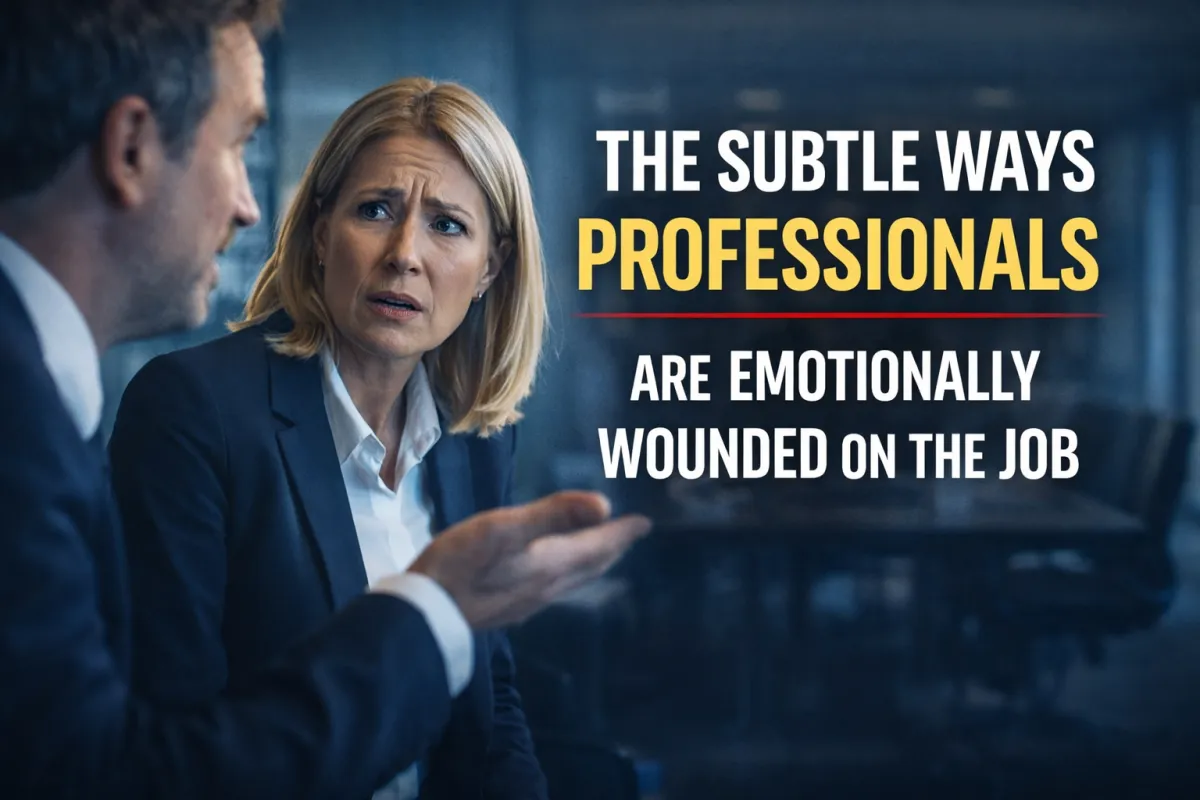
The Subtle Behaviors That Lead to Professional Hurt
It rarely begins with something obvious.
There is no single explosive moment. No dramatic confrontation. No clear line you can point to and say, that’s when it happened. Instead, it often unfolds quietly… in passing comments, subtle exclusions, a look, a tone, a pattern... You feel it before you understand it. Something shifts. You cannot quite name it, but you know it does not feel right.
And then you do what most professionals do.
You keep going.
I have worked with many professionals who describe these experiences almost apologetically, as though they are unsure whether what they felt even “counts.” They say things like, “It wasn’t that bad,” or “Maybe I’m overthinking it.” Yet as they speak, the weight of what they have carried begins to surface. Not because the events were loud… but because they were repeated, subtly, and targeted very personally.
Let me bring you closer to what this often looks like.
It is the meeting where your idea is ignored… until someone else says the same thing and is praised for it. You notice it, but you say nothing. You tell yourself it is not worth making an issue out of it.
It is the feedback that feels less like guidance and more like erosion. Not direct enough to challenge, not constructive enough to help, but just enough to make you question yourself. Over time, you begin to second-guess your instincts.
It is the quiet exclusion. Not being invited. Not being informed. Not being considered. No explanation is given, so you create your own: Maybe I’m not as valued as I thought.
It is the joke that lands the wrong way… but everyone else laughs. You smile along – more like gritting your teeth - while everything inside you tightens up. Or, shrinks…
It is the tone. The dismissiveness. The subtle eye roll. The interruption that happens just often enough to make it a pattern, but not often enough to be undeniable.
None of these, on their own, may seem severe.
That is precisely the problem.
Because when something is subtle, it is easy to dismiss. When it is intermittent, it is easy to doubt. And when it is woven into the culture, it is easy to normalize.
But your nervous system does not normalize it.
Your mind may rationalize it. Your professionalism may suppress it. But internally, something is being registered. Over time, these experiences accumulate. They begin to shape how you see yourself, how you show up, and how much of yourself you are willing to bring into the room.
You may notice that you speak less. You hold back ideas. You rehearse what you want to say before saying it. You become more cautious… more guarded. Not because you lack ability… but because something in the environment has taught you that self-expression comes at a cost.
I have seen highly competent professionals slowly shrink in environments that never explicitly told them to do so.
That is one description of how Professional Hurt occurs.
That is also the nature of subtle emotional wounding.
It does not break you in a moment. It reshapes you over time.
One of the most common forms this takes is chronic invalidation. You express a concern and it is minimized. You raise a point and it is redirected. You share an experience and it is reframed in a way that removes its impact. Eventually, you begin to question not just your voice… but your perception.
Another form is quiet humiliation. Not overt embarrassment, but small, repeated moments that place you just slightly off balance in front of others. A comment that undercuts you... A correction that feels unnecessary... Or a public remark that leaves you subtly unsteady or embarrassed… and you’re not even sure why.
Then there are the micro-aggressions… those brief, often ambiguous interactions that carry a sting. They are easy to deny, easy to overlook, and difficult to confront. Yet they linger... They accumulate... And they communicate something lurking beneath the surface...
And you know… you feel it.
And because you feel it, it matters.
Over time, these subtle experiences can lead to something deeper. A kind of internal shift where your confidence is no longer assumed, but negotiated… Where your sense of professional identity becomes less stable... And where you begin to wonder whether the problem is you.
In my work, both in clinical settings and in coaching conversations, I have come to recognize how widespread this experience is… and how rarely it is named. Many professionals are not dealing with dramatic abuse, but with something more insidious… a slow, quiet inner erosion.
What becomes important, then, is not just recognizing these patterns, but responding to them in ways that protect your sense of self.
You begin by trusting your internal signals. If something feels off repeatedly, it deserves your attention. You do not need a dramatic event to justify your awareness.
You can also start to observe patterns without immediately judging yourself. Instead of asking, “What is wrong with me?” you might ask, “What is happening here, and how is it affecting me?”
Another powerful shift is reclaiming your internal narrative. Just because something is implied does not make it true. Subtle environments often communicate messages indirectly. However, you have the ability to decide which messages you accept and which you question... and which ones you totally reject.
And perhaps most importantly, you need to stay connected to your competence, knowledge and expertise. Not the versions of you shaped by that environment, but the versions of you that existed before it… and still exist within you.
There is more to be said about this. Much more.
In fact, the quiet and often misunderstood nature of these experiences is one of the reasons I felt compelled to explore them more deeply in my forthcoming book, Healing from Professional Hurt. Because what many professionals dismiss as “just part of the job” is, in reality, shaping them in ways that deserve attention, understanding, and ultimately, healing.
If you recognize yourself in any of this, you are not imagining it. And you are not alone.
What you are experiencing may be subtle. But its impact is not. Its impact is damaging now and can get worse.
And, if you recognize any of this, in you or a colleague, help is one call away – to an executive coach or other helping professional.
Or reach out to me…