
Professional Hurt, Emotional Intelligence
& Resilience Knowledge Hub
Articles and insights from Dr. Marcus Mottley on professional hurt, emotional intelligence, workplace emotional abuse, toxic leadership, emotional resilience, and recovery for professionals. Professional hurt is the emotional and psychological injury caused by toxic leadership, chronic invalidation, humiliation, betrayal, workplace emotional abuse, and organizational harm.
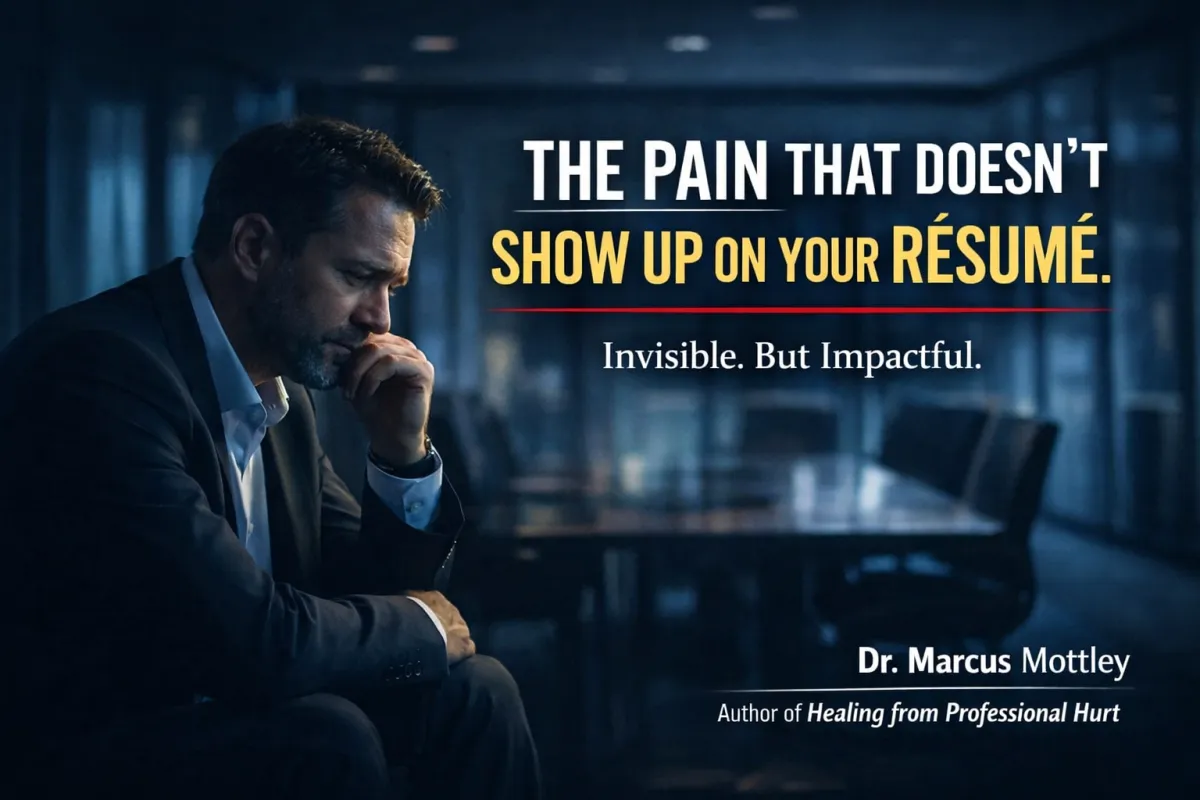
The Kind of Pain That Doesn’t Show Up on Your Résumé
There is a kind of pain that never appears on your résumé.
It does not show up under education, credentials, promotions, or accomplishments. It does not appear in performance evaluations. It is not listed in exit interviews. Yet I have seen it shape careers, alter confidence, and quietly redirect the career trajectory of highly capable professionals.
I am referring to the emotional injuries that happen at work.
After decades of working as both a Clinical Psychologist and an Executive Coach, I have sat across from professionals who looked accomplished on paper but felt fractured inside. Senior leaders... Public sector managers... Healthcare professionals… Corporate executives... High performers in competitive environments... From the outside, they were thriving. From the inside, many were carrying something they could not quite name.
They would describe a “difficult boss.” A humiliating meeting. A season of chronic undermining. Being excluded from key conversations. Being publicly criticized in ways that felt personal rather than constructive. Being set up to fail. Being ignored. Being targeted. Being worn down.
They rarely called it abuse. Most of them verbally minimized it.
“It was just politics.” “That’s just how that organization was.” “I probably should have been stronger.” “It happens all the time.” “It’s par for the course.”
But what I observed was something deeper.
When a professional begins to doubt their competence after years of demonstrated confidence… when they hesitate to speak up because they expect to be dismissed… when they feel a knot in their stomach before logging into a meeting… when they leave a job but still feel the emotional charge years later… we are no longer talking about ordinary stress.
We are talking about injury.
The modern workplace can be demanding. Pressure, deadlines, performance expectations, and even strong feedback are part of professional life. That is not the issue. The issue arises when repeated patterns of humiliation, intimidation, exclusion, manipulation, or chronic disrespect begin to erode a person’s sense of safety and identity.
And here is what makes this kind of pain particularly dangerous: it is invisible.
There is no cast. No scar. No medical report. No public acknowledgment.
The professional continues to function. They show up. They perform. They achieve. Yet something inside has shifted.
I have worked with professionals who left a toxic environment years ago but still flinch when receiving feedback about their current employment. Others who earned promotions but could not shake the internal voice that told them they were inadequate. Some changed entire career paths because one damaging experience made them question whether they belonged in their field at all.
This kind of pain does not announce itself loudly. It settles quietly into the nervous system. It alters self-perception. It shapes future decisions. It affects how a professional trusts, leads, collaborates, and even dreams.
Perhaps most concerning is how normalized it has become.
In many workplaces, emotional harm is reframed as toughness. Silence is reframed as professionalism. Endurance is praised. And those who struggle internally often assume they are weak rather than wounded.
They are neither.
Instead, they are human.
When repeated emotional blows occur in an environment where your livelihood, reputation, and identity are tied to performance, the impact can be profound. Work is not just what we do. For many professionals, it is who we are. So, when harm happens there, it reaches deeply – inside.
Over the years, I began to recognize that what many professionals were describing was not simply stress or disappointment. It was something more specific. Something called ‘Professional Hurt’.
Professional Hurt refers to the emotional trauma that results from on-the-job abuse, chronic mistreatment, or psychologically unsafe environments. It can be subtle or overt. Sudden or cumulative. But its effects can linger far beyond the workplace where it began.
Because I have seen how widespread and underestimated this phenomenon is, I wrote a forthcoming book titled Healing from Professional Hurt: Overcoming Emotional Trauma from On-the-Job Abuse. I wrote it for the millions of professionals who have silently carried experiences that reshaped them.
If you have ever left a workplace feeling smaller than when you entered it… if you have questioned your worth after repeated disrespect… if you still feel the emotional residue of a past role… then you may recognize what I am describing.
This kind of pain may not show up on your résumé.
But it may have shaped your story.
And it deserves to be understood.
And, then, dealt with… effectively!

FAQ
Frequently Asked Questions About Professional Hurt, Emotional Intelligence, and Emotional Resilience.
1. What is Professional Hurt?
Professional Hurt is the emotional, psychological, and often career-related injury that can occur when professionals experience toxic leadership, workplace emotional abuse, chronic invalidation, humiliation, betrayal, intimidation, exclusion, or organizational harm. Unlike ordinary workplace stress, Professional Hurt can continue affecting a person’s confidence, identity, motivation, relationships, and emotional well-being long after the original experience has ended.
2. How is Professional Hurt different from burnout?
Burnout usually comes from chronic stress, overwork, emotional exhaustion, and prolonged demands. Professional Hurt goes deeper. It often involves emotional injury caused by toxic relationships, betrayal, humiliation, bullying, invalidation, or abusive leadership. A burned-out professional may feel depleted. A professionally hurt person may feel wounded, betrayed, diminished, and unsure of themselves.
3. Can toxic leadership cause Professional Hurt?
Yes. Toxic leadership can cause Professional Hurt when leaders use intimidation, public criticism, manipulation, favoritism, emotional invalidation, threats, exclusion, or control tactics instead of emotionally intelligent leadership. Over time, these behaviors can damage trust, confidence, motivation, and psychological safety.
4. Can Professional Hurt affect emotional health?
Yes. Professional Hurt can contribute to anxiety, depression, rumination, sleep problems, emotional exhaustion, loss of confidence, irritability, isolation, and difficulty trusting others. Some professionals continue replaying painful workplace experiences long after they have left the environment because the emotional injury has not yet been fully processed or healed.
5. Why do some professionals suffer in silence?
Many professionals suffer in silence because they fear being judged, labeled as weak, viewed as too sensitive, or punished for speaking up. High-achieving professionals may also minimize their pain because they are used to performing under pressure. Unfortunately, silence often allows the emotional injury to deepen.
6. What role does Emotional Intelligence play in preventing Professional Hurt?
Emotional Intelligence helps leaders recognize the emotional impact of their words, decisions, power, and behavior. Leaders with strong emotional intelligence are more likely to communicate respectfully, manage conflict constructively, repair harm, build trust, and create psychologically safer workplaces. Poor emotional intelligence often increases the risk of emotional damage.
7. How does Emotional Resilience help professionals recover?
Emotional Resilience helps professionals regain stability, perspective, confidence, and emotional strength after difficult workplace experiences. It does not mean pretending the hurt did not happen. It means learning how to process the experience, protect your emotional health, rebuild your sense of self, and move forward without allowing the pain to define your future.
8. How do I know if I have experienced Professional Hurt?
You may have experienced Professional Hurt if a workplace experience continues to affect your confidence, mood, motivation, sleep, relationships, or sense of professional identity. Signs may include replaying painful conversations, dreading work, feeling emotionally unsafe, questioning your competence, feeling betrayed, or struggling to recover from how you were treated.
9. Can leaders repair Professional Hurt after damage has been done?
In some cases, yes. Repair requires honesty, accountability, humility, changed behavior, and emotionally intelligent communication. Leaders must stop minimizing the harm, listen without defensiveness, acknowledge the emotional impact, and create conditions where trust can be rebuilt. However, repair is not possible if harmful behavior continues or accountability is avoided.
10. How can Dr. Marcus Mottley’s work help professionals dealing with Professional Hurt?
Dr. Marcus M. Mottley, brings together clinical psychology, executive coaching, emotional intelligence, leadership development, and resilience training to help professionals understand, assess, and recover from Professional Hurt. His work focuses on helping professionals make sense of workplace emotional injury, rebuild confidence, strengthen resilience, and move forward with greater emotional clarity and professional power.