
Professional Hurt, Emotional Intelligence
& Resilience Knowledge Hub
Articles and insights from Dr. Marcus Mottley on professional hurt, emotional intelligence, workplace emotional abuse, toxic leadership, emotional resilience, and recovery for professionals. Professional hurt is the emotional and psychological injury caused by toxic leadership, chronic invalidation, humiliation, betrayal, workplace emotional abuse, and organizational harm.
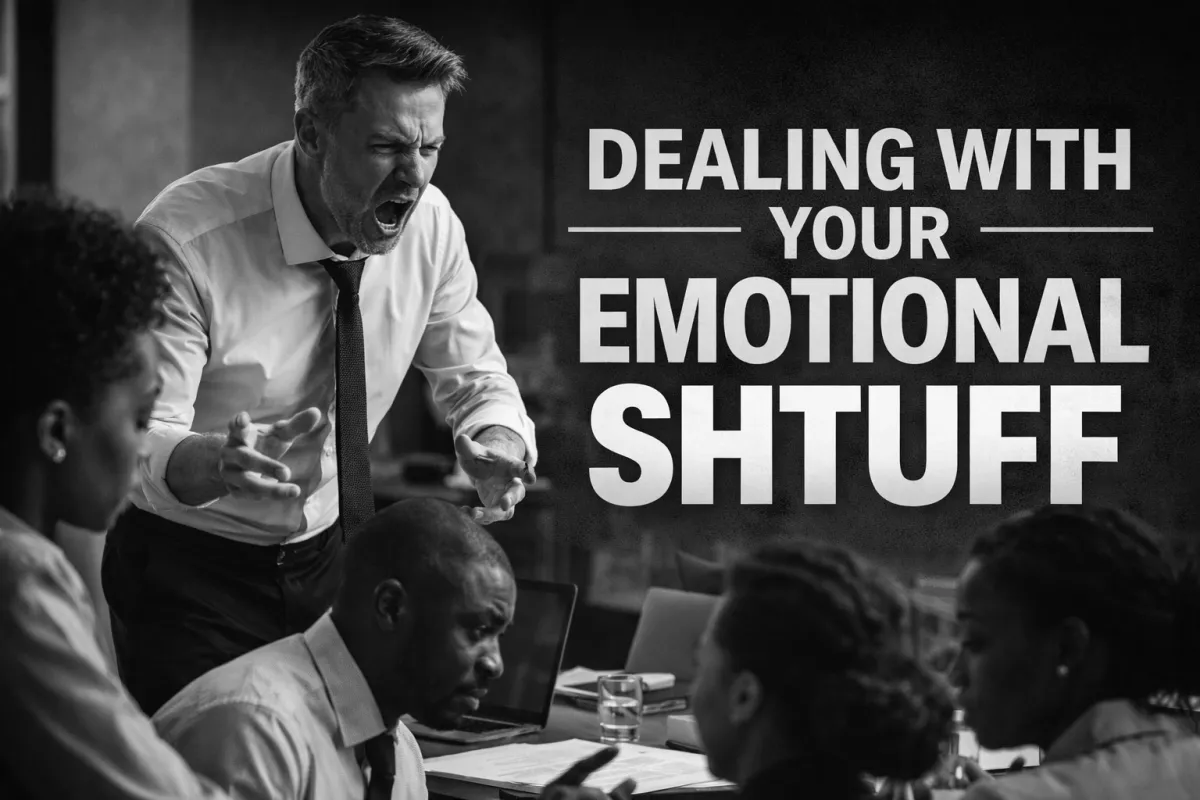
Dealing with Your Own Emotional Shtuff
Let me begin with something that may feel slightly uncomfortable, but necessary:
The biggest challenge you may face at work… may not be your boss, your workload, nor even the changing demands of your industry.
It might be you.
No… not your level of intelligence. Not your qualifications. And… Not your experience.
So what might it be? Your own ‘emotional shtuff’.
I use that phrase deliberately. Because what interferes with your performance is rarely neat, logical, or easy to articulate. It is messy. It sits beneath the surface. And it shows up at the worst possible moments… in meetings, in conversations, in decisions that matter.
You may not even notice it happening. But others do.
The Quiet Interference of Your ‘Emotional Shtuff’
Consider how this plays out in everyday professional life:
You are in a meeting, and someone challenges your idea. Instead of evaluating the feedback objectively, you feel a surge of defensiveness. Your tone shifts. You push back harder than necessary. What could have been a productive discussion becomes tension.
Or perhaps you hesitate to speak up at all. Not because you lack insight, but because your confidence dips at critical moments. You second-guess yourself. You stay quiet. And your value goes unnoticed.
Or maybe you find yourself reacting to a colleague’s success with subtle irritation. Not openly… but internally. A quiet comparison. A flicker of jealousy. It changes how you engage with them, even if you try to hide it.
This is emotional shtuff in action.
It shows up as:
Impulse control issues, reacting too quickly, too sharply, too emotionally
Lack of confidence, holding back when it matters most
Jealousy or comparison, distorting how you see others
Sensitivity to criticism, taking feedback personally instead of constructively
Frustration that leaks into your tone, body language, or decisions
None of these mean you are incompetent. In fact, many highly capable professionals struggle with these exact patterns.
But here is the problem:
Left unmanaged, your emotional shtuff quietly erodes your effectiveness.
How It Impacts Your Work
Your emotional patterns influence three critical areas:
1. Interpersonal Relationships
People respond less to what you say and more to how you say it. Emotional reactivity, withdrawal, or tension creates distance. Over time, this weakens trust, collaboration, and influence.
2. Leadership Presence
Leadership is not just about making decisions. It is about emotional steadiness. If your internal state is inconsistent, your external leadership becomes unpredictable. Others begin to feel it, even if they cannot name it.
3. Decision Making
Unchecked emotions bias your thinking. You may avoid necessary risks due to fear, or make impulsive decisions driven by frustration or ego. In both cases, the quality of your judgment declines.
The Turning Point: Awareness Without Judgment
The first step is not control. It is awareness.
Most professionals either ignore their emotional patterns or judge themselves harshly for them. Neither approach works.
Instead, begin here: “What tends to get triggered in me at work, and when?”
Notice the patterns:
When do you become defensive?
When do you withdraw?
When do you overreact?
When do you feel “less than” or “threatened”?
You are not trying to fix anything yet. You are identifying your emotional fingerprints.
Because you cannot manage what you do not recognize.
Practical Ways to Manage Your Emotional Shtuff
Once you begin to see your patterns, you can start to work with them more effectively.
1. Create a Pause Between Trigger and Response
Most emotional mistakes happen in the gap of a few seconds.
Train yourself to pause. Even briefly.
Take a breath. Slow your response. Ask yourself:
“What is actually happening here?”
“What response would serve me best right now?”
This small interruption can prevent large consequences.
2. Separate Facts from Emotional Interpretation
Your mind quickly adds meaning to situations.
A colleague’s short email becomes “they are upset with me.” A manager’s feedback becomes “I am not good enough.”
Slow this down. Ask yourself:
“What are the facts?”
“What story am I adding to this?”
This reduces unnecessary emotional escalation.
3. Strengthen Internal Confidence Deliberately
Confidence is not a personality trait. It is a practiced state.
Prepare before meetings.
Acknowledge your competence.
Remind yourself of what you bring to the table.
Confidence grows when it is reinforced intentionally, not when you wait to “feel ready.”
4. Reframe Comparison into Information
Jealousy often signals something useful. Instead of resenting someone else’s success, ask:
“What are they doing well that I can learn from?”
This shifts you from emotional reaction to professional growth.
5. Develop Emotional Accountability
This is critical.
Your emotional reactions are your responsibility. Not your colleague’s tone. Not your boss’s style.
When you own your responses, you regain control over them.
A Final Thought
You do not need to eliminate your emotional shtuff. That is often unrealistic. But you do need to understand it, manage it, and reduce its interference. Because at your level… technical skill is no longer the differentiator.
Emotional mastery is the differentiator. (And that’s what I teach!)
The professionals who rise, lead effectively, and navigate complexity with clarity are not those without emotional challenges…
The ones who rise are the ones who have learned to work with their ‘own emotional shtuff’, rather than be controlled by them.
So the real question is not whether you have emotional shtuff.
Because you do. Yes you do!
The question is:
Are you managing it… or is it quietly managing you?
FAQ
Frequently Asked Questions About Professional Hurt, Emotional Intelligence, and Emotional Resilience.
1. What is Professional Hurt?
Professional Hurt is the emotional, psychological, and often career-related injury that can occur when professionals experience toxic leadership, workplace emotional abuse, chronic invalidation, humiliation, betrayal, intimidation, exclusion, or organizational harm. Unlike ordinary workplace stress, Professional Hurt can continue affecting a person’s confidence, identity, motivation, relationships, and emotional well-being long after the original experience has ended.
2. How is Professional Hurt different from burnout?
Burnout usually comes from chronic stress, overwork, emotional exhaustion, and prolonged demands. Professional Hurt goes deeper. It often involves emotional injury caused by toxic relationships, betrayal, humiliation, bullying, invalidation, or abusive leadership. A burned-out professional may feel depleted. A professionally hurt person may feel wounded, betrayed, diminished, and unsure of themselves.
3. Can toxic leadership cause Professional Hurt?
Yes. Toxic leadership can cause Professional Hurt when leaders use intimidation, public criticism, manipulation, favoritism, emotional invalidation, threats, exclusion, or control tactics instead of emotionally intelligent leadership. Over time, these behaviors can damage trust, confidence, motivation, and psychological safety.
4. Can Professional Hurt affect emotional health?
Yes. Professional Hurt can contribute to anxiety, depression, rumination, sleep problems, emotional exhaustion, loss of confidence, irritability, isolation, and difficulty trusting others. Some professionals continue replaying painful workplace experiences long after they have left the environment because the emotional injury has not yet been fully processed or healed.
5. Why do some professionals suffer in silence?
Many professionals suffer in silence because they fear being judged, labeled as weak, viewed as too sensitive, or punished for speaking up. High-achieving professionals may also minimize their pain because they are used to performing under pressure. Unfortunately, silence often allows the emotional injury to deepen.
6. What role does Emotional Intelligence play in preventing Professional Hurt?
Emotional Intelligence helps leaders recognize the emotional impact of their words, decisions, power, and behavior. Leaders with strong emotional intelligence are more likely to communicate respectfully, manage conflict constructively, repair harm, build trust, and create psychologically safer workplaces. Poor emotional intelligence often increases the risk of emotional damage.
7. How does Emotional Resilience help professionals recover?
Emotional Resilience helps professionals regain stability, perspective, confidence, and emotional strength after difficult workplace experiences. It does not mean pretending the hurt did not happen. It means learning how to process the experience, protect your emotional health, rebuild your sense of self, and move forward without allowing the pain to define your future.
8. How do I know if I have experienced Professional Hurt?
You may have experienced Professional Hurt if a workplace experience continues to affect your confidence, mood, motivation, sleep, relationships, or sense of professional identity. Signs may include replaying painful conversations, dreading work, feeling emotionally unsafe, questioning your competence, feeling betrayed, or struggling to recover from how you were treated.
9. Can leaders repair Professional Hurt after damage has been done?
In some cases, yes. Repair requires honesty, accountability, humility, changed behavior, and emotionally intelligent communication. Leaders must stop minimizing the harm, listen without defensiveness, acknowledge the emotional impact, and create conditions where trust can be rebuilt. However, repair is not possible if harmful behavior continues or accountability is avoided.
10. How can Dr. Marcus Mottley’s work help professionals dealing with Professional Hurt?
Dr. Marcus M. Mottley, brings together clinical psychology, executive coaching, emotional intelligence, leadership development, and resilience training to help professionals understand, assess, and recover from Professional Hurt. His work focuses on helping professionals make sense of workplace emotional injury, rebuild confidence, strengthen resilience, and move forward with greater emotional clarity and professional power.