
Professional Hurt, Emotional Intelligence
& Resilience Knowledge Hub
Articles and insights from Dr. Marcus Mottley on professional hurt, emotional intelligence, workplace emotional abuse, toxic leadership, emotional resilience, and recovery for professionals. Professional hurt is the emotional and psychological injury caused by toxic leadership, chronic invalidation, humiliation, betrayal, workplace emotional abuse, and organizational harm.
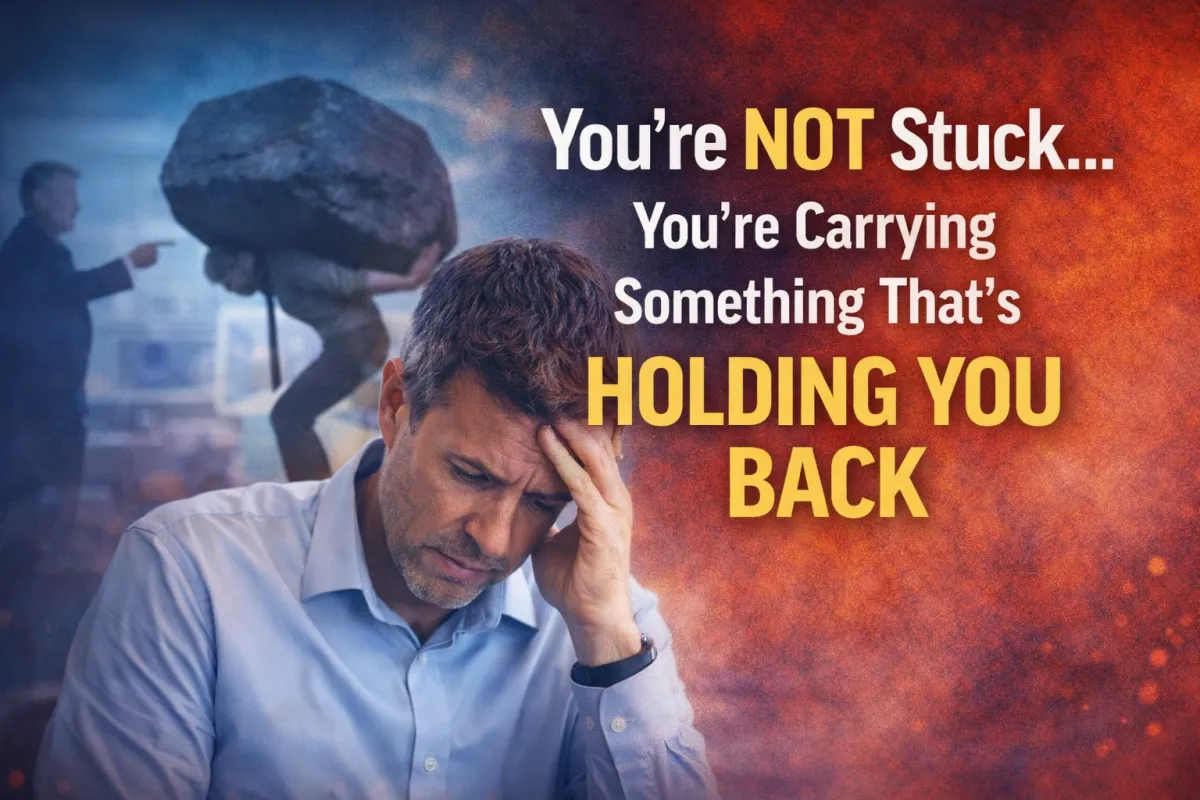
You’re Not Stuck… You’re Carrying Something That’s Holding You Back
Let me say something to you directly. If you are a mid-career professional feeling stuck, frustrated, or quietly questioning your next move… it may not be your intelligence, your experience, or even your opportunities that are holding you back.
It may be what you are carrying.
I have worked with professionals for decades who are highly capable, well-educated, and deeply experienced. On paper, they should be progressing, expanding, advancing. Yet many find themselves plateauing… or worse, regressing in confidence, clarity, and momentum.
And when we begin to explore what is happening, the issue is rarely a lack of intellect.
In fact, for many professionals, intellect becomes the shield.
You rely on what you know. You analyze. You strategize. You problem-solve. You think your way through situations. And to a large extent, that has worked for you. It has gotten you this far.
But here is the uncomfortable truth. At a certain point in your career, intellect alone is not enough. Because your challenges are no longer purely technical. They are emotional.
You are dealing with people, dynamics, pressure, perception, identity, uncertainty, and change. You are navigating environments where how you feel, how you respond, and how you interpret situations matter just as much as what you know.
This is where low or underdeveloped emotional intelligence quietly begins to interfere.
Not in obvious ways… but in subtle patterns.
You may find yourself reacting more quickly than you used to. Becoming impatient. Taking things personally. Withdrawing when challenged. Overthinking interactions. Replaying conversations. Questioning your decisions long after they’ve been made.
Or perhaps you’ve gone in the opposite direction.
You’ve learned to suppress. To stay composed. To keep things “professional.” You avoid conflict. You hold your thoughts. You maintain control on the surface… but internally, there is tension.
Both patterns come at a cost.
Because when emotional intelligence is not actively developed, your emotional world begins to operate on autopilot. And autopilot is shaped not just by your current environment… but by your past experiences.
This is where many professionals overlook something critical. You may not just be responding to what is happening now. You may be reacting to what has happened before.
A past boss who undermined you. A role where your contributions were ignored. A period where you felt exposed, criticized, or diminished. You may have moved on physically… but emotionally, part of that experience may still be with you.
It shows up in hesitation… In over-preparation… In the need to prove yourself… In the reluctance to fully trust your voice.
You may not consciously think about those past experiences. But they can still shape how you interpret the present.
So now, when something ambiguous happens, you lean toward self-doubt. When feedback is given, you hear more than what is said. When opportunity arises, part of you pulls back.
Not because you lack ability… But because something in you is trying to protect you.
This is what I often see with professionals who feel stuck. They are not blocked by a lack of knowledge. They are constrained by unexamined emotional patterns.
And here is the challenge.
Most professional environments reward intellect far more than emotional awareness. So you continue to sharpen your technical skills, your strategic thinking, your expertise… while the emotional layer remains underdeveloped or unattended.
Over time, that imbalance becomes limiting. You begin to feel the strain. The effort increases. The satisfaction decreases. The clarity fades.
So what do you do?
You begin by shifting your focus.Instead of asking only, “What do I need to do?” you also ask, “What is happening within me as I do it?”
That question opens a different level of awareness.
You start to notice your triggers. Your patterns. Your internal reactions. Not to judge them… but to understand them.
You begin to recognize when you are over-relying on intellect to avoid discomfort. When you are holding back because of past experiences. When you are reacting rather than responding.
This is the foundation of emotional intelligence. Not theory. But… Awareness.
From there, you can begin to make small but powerful adjustments.
You pause before reacting… You separate current situations from past experiences… You question the assumptions you are making about yourself. And, you allow yourself to engage more fully, not less.
These shifts may seem subtle, but they are significant, because growth at your level is no longer about adding more knowledge. It is about removing what is interfering with your ability to use what you already know.
And sometimes, what is interfering is not visible.
It is something you have been carrying. Once you begin to see that clearly… you are no longer stuck. You are simply in a position to move forward differently.
FAQ
Frequently Asked Questions About Professional Hurt, Emotional Intelligence, and Emotional Resilience.
1. What is Professional Hurt?
Professional Hurt is the emotional, psychological, and often career-related injury that can occur when professionals experience toxic leadership, workplace emotional abuse, chronic invalidation, humiliation, betrayal, intimidation, exclusion, or organizational harm. Unlike ordinary workplace stress, Professional Hurt can continue affecting a person’s confidence, identity, motivation, relationships, and emotional well-being long after the original experience has ended.
2. How is Professional Hurt different from burnout?
Burnout usually comes from chronic stress, overwork, emotional exhaustion, and prolonged demands. Professional Hurt goes deeper. It often involves emotional injury caused by toxic relationships, betrayal, humiliation, bullying, invalidation, or abusive leadership. A burned-out professional may feel depleted. A professionally hurt person may feel wounded, betrayed, diminished, and unsure of themselves.
3. Can toxic leadership cause Professional Hurt?
Yes. Toxic leadership can cause Professional Hurt when leaders use intimidation, public criticism, manipulation, favoritism, emotional invalidation, threats, exclusion, or control tactics instead of emotionally intelligent leadership. Over time, these behaviors can damage trust, confidence, motivation, and psychological safety.
4. Can Professional Hurt affect emotional health?
Yes. Professional Hurt can contribute to anxiety, depression, rumination, sleep problems, emotional exhaustion, loss of confidence, irritability, isolation, and difficulty trusting others. Some professionals continue replaying painful workplace experiences long after they have left the environment because the emotional injury has not yet been fully processed or healed.
5. Why do some professionals suffer in silence?
Many professionals suffer in silence because they fear being judged, labeled as weak, viewed as too sensitive, or punished for speaking up. High-achieving professionals may also minimize their pain because they are used to performing under pressure. Unfortunately, silence often allows the emotional injury to deepen.
6. What role does Emotional Intelligence play in preventing Professional Hurt?
Emotional Intelligence helps leaders recognize the emotional impact of their words, decisions, power, and behavior. Leaders with strong emotional intelligence are more likely to communicate respectfully, manage conflict constructively, repair harm, build trust, and create psychologically safer workplaces. Poor emotional intelligence often increases the risk of emotional damage.
7. How does Emotional Resilience help professionals recover?
Emotional Resilience helps professionals regain stability, perspective, confidence, and emotional strength after difficult workplace experiences. It does not mean pretending the hurt did not happen. It means learning how to process the experience, protect your emotional health, rebuild your sense of self, and move forward without allowing the pain to define your future.
8. How do I know if I have experienced Professional Hurt?
You may have experienced Professional Hurt if a workplace experience continues to affect your confidence, mood, motivation, sleep, relationships, or sense of professional identity. Signs may include replaying painful conversations, dreading work, feeling emotionally unsafe, questioning your competence, feeling betrayed, or struggling to recover from how you were treated.
9. Can leaders repair Professional Hurt after damage has been done?
In some cases, yes. Repair requires honesty, accountability, humility, changed behavior, and emotionally intelligent communication. Leaders must stop minimizing the harm, listen without defensiveness, acknowledge the emotional impact, and create conditions where trust can be rebuilt. However, repair is not possible if harmful behavior continues or accountability is avoided.
10. How can Dr. Marcus Mottley’s work help professionals dealing with Professional Hurt?
Dr. Marcus M. Mottley, brings together clinical psychology, executive coaching, emotional intelligence, leadership development, and resilience training to help professionals understand, assess, and recover from Professional Hurt. His work focuses on helping professionals make sense of workplace emotional injury, rebuild confidence, strengthen resilience, and move forward with greater emotional clarity and professional power.