
Professional Hurt, Emotional Intelligence
& Resilience Knowledge Hub
Articles and insights from Dr. Marcus Mottley on professional hurt, emotional intelligence, workplace emotional abuse, toxic leadership, emotional resilience, and recovery for professionals. Professional hurt is the emotional and psychological injury caused by toxic leadership, chronic invalidation, humiliation, betrayal, workplace emotional abuse, and organizational harm.
The Hidden Burden of Being A Caregiver When You Also Have A Career!
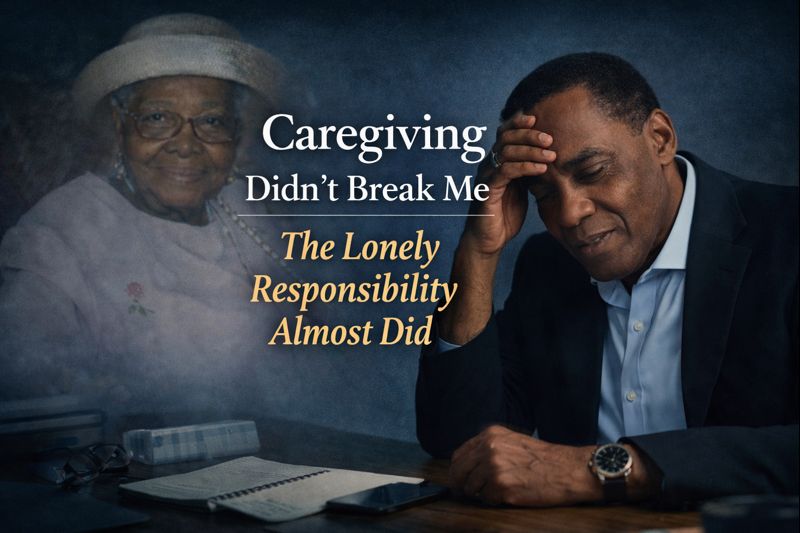
I Cared for My Mom Who Passed Away at 107… The Caregiving Didn’t Break Me… The Lonely Responsibility Almost Did… Even Though I Had Help
Caregiving rarely breaks you in dramatic moments. It wears you down quietly, steadily, and often invisibly. This is especially true when you are not only a caregiver, but also a professional with deadlines, expectations, and obligations that do not pause because someone you love needs you.
I cared for my mother until she passed away at the age of 107. I was not alone in the practical sense. I had one exceptional support person and a few others who helped on the periphery. That mattered, and I am deeply grateful. Yet the full responsibility – emotional, medical, financial, logistical, and communicative, was mine. The accountability never left my shoulders. Every decision ultimately came back to me.
That distinction matters, because many professionals who are caregivers hear, “At least you have help.” What that statement misses is this truth. Help does not remove responsibility. It does not eliminate accountability. And it does not lighten the mental and emotional weight of knowing that the final answer, the final decision, and the final consequences rest with you.
Now add a professional role to that reality.
You still have a job. You still have clients, customers, staff, or executives who depend on you. You may also have a partner, children, or extended family who need you to remain functional, present, and emotionally available. The result is a constant state of internal pressure that few people fully see.
The Professional Who Is Also A Caregiver Carries A Unique Burden!
Professionals are trained to be competent, reliable, and composed. Those strengths, ironically, can become liabilities in caregiving. You problem-solve. You plan. You absorb. You carry. And, you do not easily show strain.
Meanwhile, the stress accumulates in layers – one on top of the other.
There is the emotional strain of watching someone you love age, weaken, or struggle. There is the cognitive load you carry of managing medications, appointments, symptoms, contingencies and emergencies. There is the financial pressure, delayed projects, the accumulating costs, and the constrained choices. There is the communication burden, coordinating between providers, helpers, and family members, often translating complex medical realities into something others can understand. And there is the waiting… for the next emergency… the next problem… that you have to solve – quickly.
And all of this happens while you are expected to perform professionally on your job, as if none of your caregiving life exists.
Caregiving, for most of us, is an act of love. It is also an act of duty, responsibility and accountability that we willingly embrace. However, love does not make the weight lighter. It often makes it heavier, because the stakes feel so personal and ever present.
Here Are Five Recommendations Grounded in My Lived Experiences.These recommendations are not theoretical. They come from walking this road while remaining professionally active, emotionally invested, and fully accountable.
1. Name the true burden accurately.
Do not minimize your experience by saying, “I have help, so I shouldn’t feel this way.” The burden is not only one of tasks. It is responsibility. It is decision-making. It is accountability. Everything is up to you. Naming that reality reduces self-blame and internal conflict.
2. Separate support from ownership.
Accept help fully, but recognize that ownership still requires protection. Because the responsibility remains yours, you must intentionally manage your energy, expectations, and emotional limits. Support assists in execution of tasks, but the accountability to make things happen and that they are done effectively remains with you.
3. Protect your professional identity deliberately.
Caregiving always expands from where it began with more responsibility and support needed. When this happens your work (at your job) can shrink psychologically. This is dangerous for professionals. Maintain at least one domain where you are not defined as a caregiver. You must develop the ability to shift from being a caregiver to being a professional. This preserves your competence, effectiveness, confidence, and continuity of self.
4. Schedule emotional offloading, not just rest.
Fatigue is not the only issue. Unprocessed emotion accumulates. Therapy, coaching, journaling, meditation or structured reflection are not luxuries. These are pressure-release systems that prevent silent overload.
5. Let go of the myth that strength means silence.
This is one of the beliefs that I carried for a long time. As professionals, some of us often believe that because we are capable, we should cope quietly. This belief isolated me. As a result, I have learned that carefully chosen disclosure, to the right people, in the right way, reduces loneliness without compromising privacy.
In conclusion, caregiving did not break me. What almost did was carrying the responsibility largely alone, while continuing to function as a professional, while staying emotionally present, while managing daily issues that mattered deeply and that were consequential.
If you are a professional who is also a caregiver, your struggle is not a failure of resilience. It is a reflection of how much you are carrying.
Caregiving is love. It is responsibility. It is accountability. And it deserves recognition, support, and protection, especially for those who are strong enough to keep going while quietly bearing the weight.
If you need help, please reach out to a support system. Or contact me at my email address: support at marcusmottley.com or www.MarcusMottley.com

FAQ
Frequently Asked Questions About Professional Hurt, Emotional Intelligence, and Emotional Resilience.
1. What is Professional Hurt?
Professional Hurt is the emotional, psychological, and often career-related injury that can occur when professionals experience toxic leadership, workplace emotional abuse, chronic invalidation, humiliation, betrayal, intimidation, exclusion, or organizational harm. Unlike ordinary workplace stress, Professional Hurt can continue affecting a person’s confidence, identity, motivation, relationships, and emotional well-being long after the original experience has ended.
2. How is Professional Hurt different from burnout?
Burnout usually comes from chronic stress, overwork, emotional exhaustion, and prolonged demands. Professional Hurt goes deeper. It often involves emotional injury caused by toxic relationships, betrayal, humiliation, bullying, invalidation, or abusive leadership. A burned-out professional may feel depleted. A professionally hurt person may feel wounded, betrayed, diminished, and unsure of themselves.
3. Can toxic leadership cause Professional Hurt?
Yes. Toxic leadership can cause Professional Hurt when leaders use intimidation, public criticism, manipulation, favoritism, emotional invalidation, threats, exclusion, or control tactics instead of emotionally intelligent leadership. Over time, these behaviors can damage trust, confidence, motivation, and psychological safety.
4. Can Professional Hurt affect emotional health?
Yes. Professional Hurt can contribute to anxiety, depression, rumination, sleep problems, emotional exhaustion, loss of confidence, irritability, isolation, and difficulty trusting others. Some professionals continue replaying painful workplace experiences long after they have left the environment because the emotional injury has not yet been fully processed or healed.
5. Why do some professionals suffer in silence?
Many professionals suffer in silence because they fear being judged, labeled as weak, viewed as too sensitive, or punished for speaking up. High-achieving professionals may also minimize their pain because they are used to performing under pressure. Unfortunately, silence often allows the emotional injury to deepen.
6. What role does Emotional Intelligence play in preventing Professional Hurt?
Emotional Intelligence helps leaders recognize the emotional impact of their words, decisions, power, and behavior. Leaders with strong emotional intelligence are more likely to communicate respectfully, manage conflict constructively, repair harm, build trust, and create psychologically safer workplaces. Poor emotional intelligence often increases the risk of emotional damage.
7. How does Emotional Resilience help professionals recover?
Emotional Resilience helps professionals regain stability, perspective, confidence, and emotional strength after difficult workplace experiences. It does not mean pretending the hurt did not happen. It means learning how to process the experience, protect your emotional health, rebuild your sense of self, and move forward without allowing the pain to define your future.
8. How do I know if I have experienced Professional Hurt?
You may have experienced Professional Hurt if a workplace experience continues to affect your confidence, mood, motivation, sleep, relationships, or sense of professional identity. Signs may include replaying painful conversations, dreading work, feeling emotionally unsafe, questioning your competence, feeling betrayed, or struggling to recover from how you were treated.
9. Can leaders repair Professional Hurt after damage has been done?
In some cases, yes. Repair requires honesty, accountability, humility, changed behavior, and emotionally intelligent communication. Leaders must stop minimizing the harm, listen without defensiveness, acknowledge the emotional impact, and create conditions where trust can be rebuilt. However, repair is not possible if harmful behavior continues or accountability is avoided.
10. How can Dr. Marcus Mottley’s work help professionals dealing with Professional Hurt?
Dr. Marcus M. Mottley, brings together clinical psychology, executive coaching, emotional intelligence, leadership development, and resilience training to help professionals understand, assess, and recover from Professional Hurt. His work focuses on helping professionals make sense of workplace emotional injury, rebuild confidence, strengthen resilience, and move forward with greater emotional clarity and professional power.